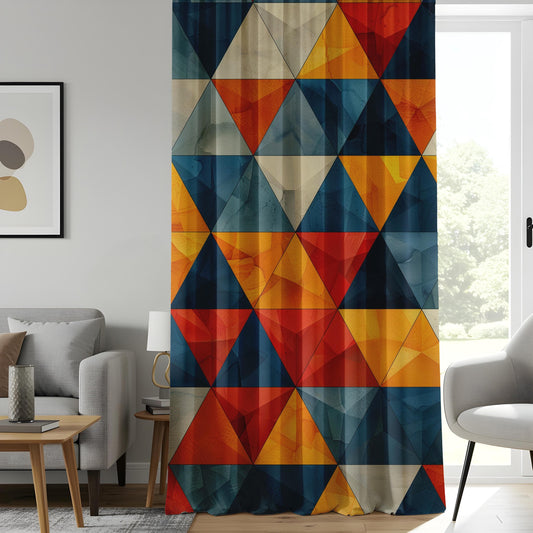
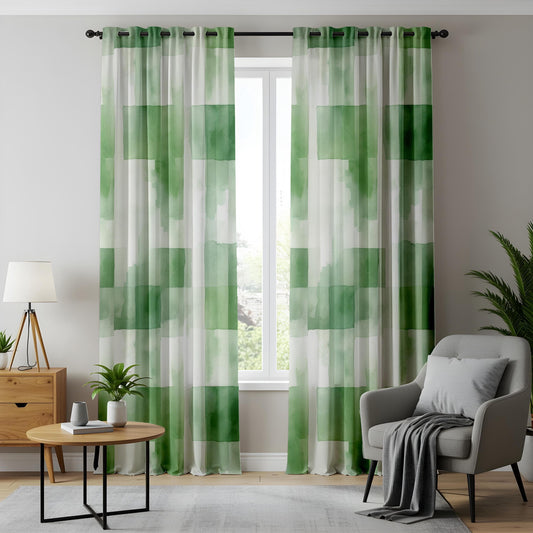
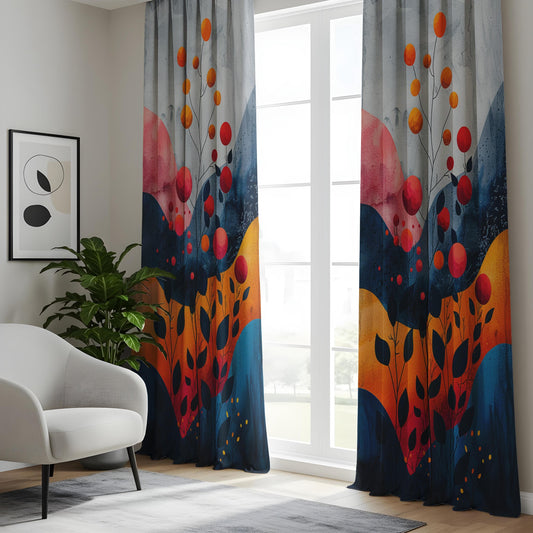
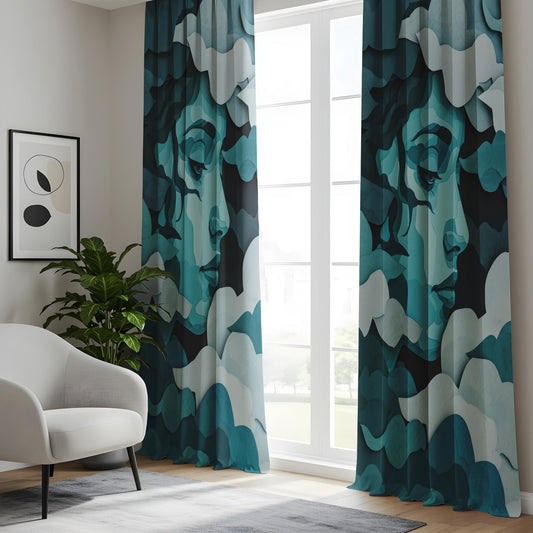
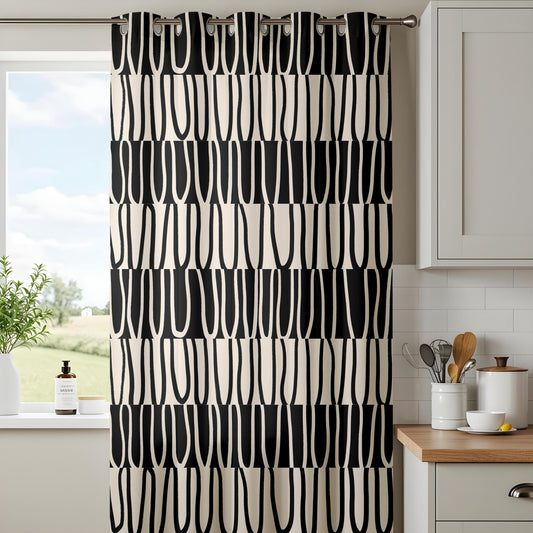
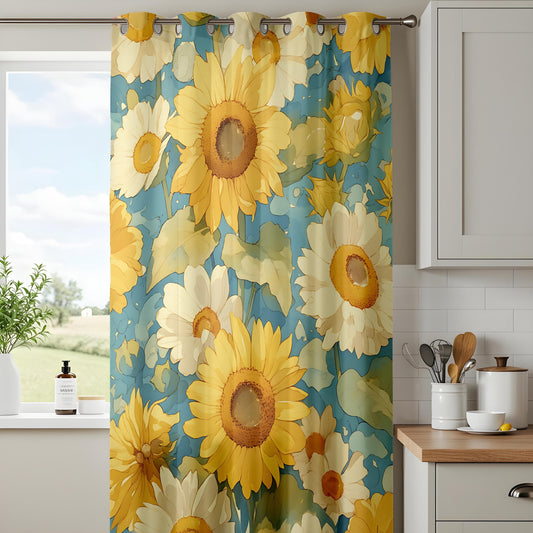
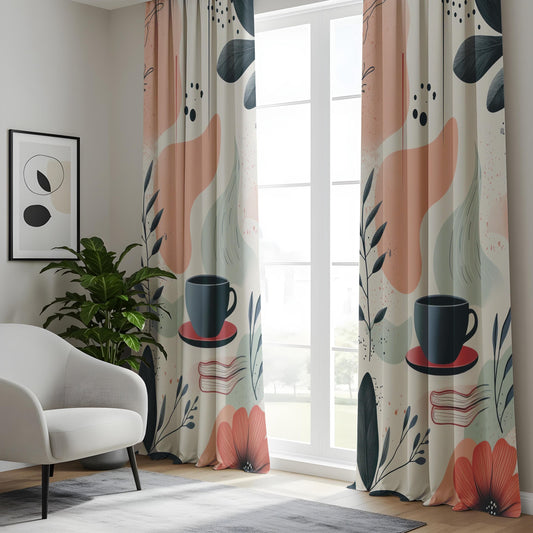
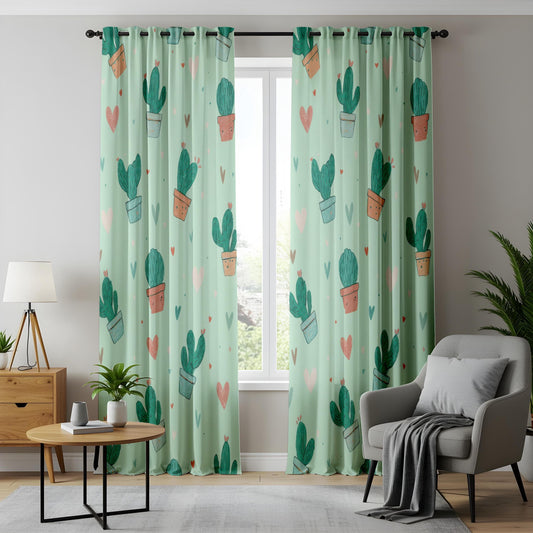
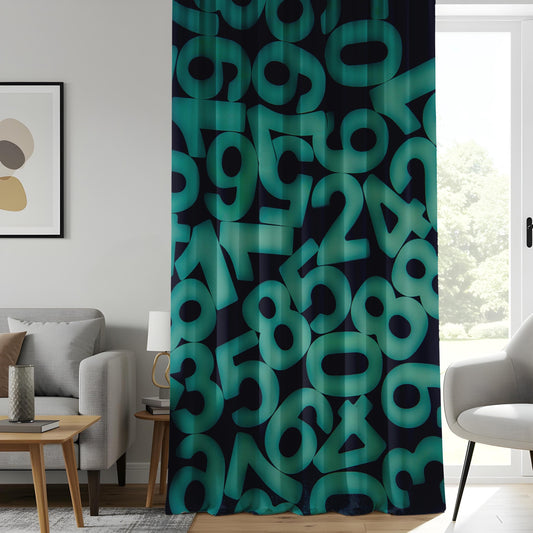
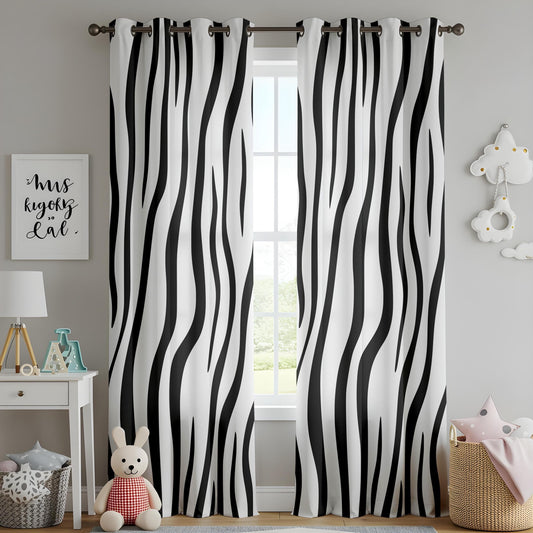
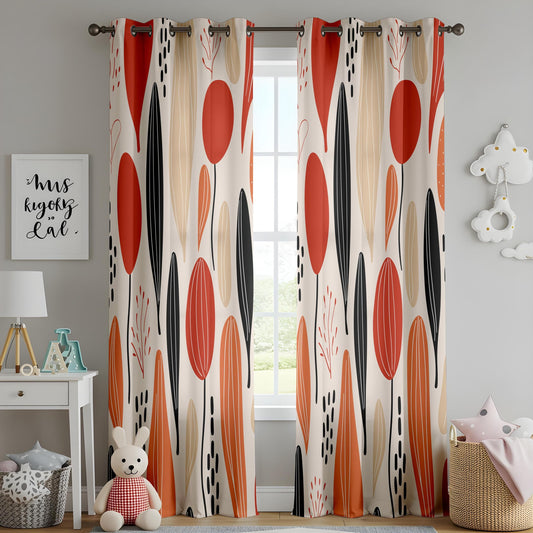
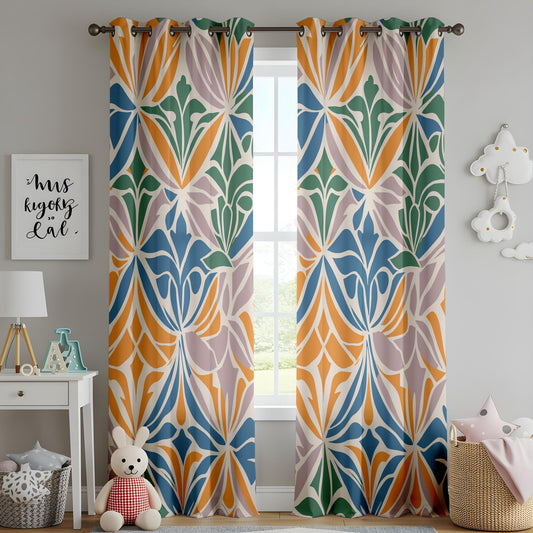
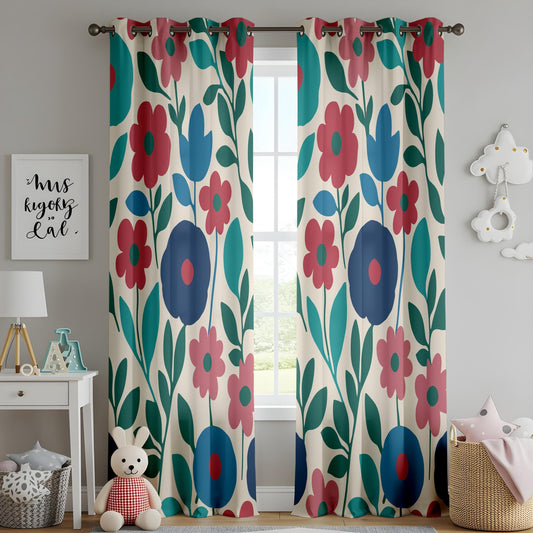
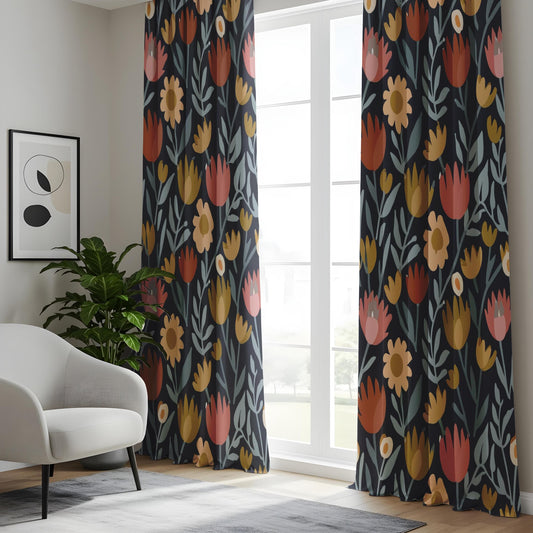
Blackout curtains solve a problem most people only notice once it is fixed. Light is the signal the body uses to decide when to wake, and a bedroom that is bright at half past four in June will wake you whether you want it to or not. Every design in our range of made to measure curtains can be ordered with a blackout lining, which is what this collection gathers together: the full catalogue of prints, made to your exact window measurements in ten sizes, as a single panel or a pair, with free worldwide delivery.
What a Blackout Lining Actually Does
A blackout lining is a separate opaque layer bonded behind the printed face of the curtain. Light cannot pass through it, so the only light that reaches the room comes around the edges of the fabric rather than through it. That distinction matters, because it means the darkness you get depends as much on how the curtains are hung as on the lining itself. The added layer also gives the curtain noticeably more body, so it hangs in fuller folds than an unlined panel of the same size.
-
Blocks light rather than filtering it. An unlined curtain diffuses daylight. A lined one stops it, which is the difference between a dim room and a dark one.
-
Adds weight and drape. The extra layer makes the curtain hang better, which is a benefit people notice before they notice the darkness.
-
Protects the print. The lining takes the direct sunlight on a south or west facing window, which keeps the printed colours truer for longer.
-
Reduces some noise. Denser fabric absorbs a little more sound than a single layer. It is a modest effect rather than soundproofing, but it is real.
Where Blackout Curtains Earn Their Place
The benefit is largest wherever light and sleep collide. That is obvious in bedrooms, but there are several rooms where blackout lining is the practical answer to a problem people do not immediately connect to their windows.
-
Bedrooms. British summer light arrives before five in the morning and lingers past nine at night. A blackout lining is the single change that makes an early bedtime and a full night's sleep possible in June.
-
Nurseries and children's rooms. Daytime naps become realistic and summer bedtimes stop being a negotiation. Our kids and nursery designs are all available with this lining.
-
Home cinemas and snugs. Dark walls and dark fabric stop light bouncing onto the screen, which improves contrast in a way no television setting can.
-
Rooms for shift workers. Sleeping during daylight is difficult without proper darkness, and a blackout lining does more for it than a blind or a sleep mask.
-
South and west facing rooms. Late afternoon sun causes glare on screens and fades furniture and flooring. Closing lined curtains during the worst of it protects both.
Blackout or Thermal Blackout?
Both linings block light equally. The difference is what else they do. A plain blackout lining handles darkness. A thermal blackout lining adds an insulating layer that slows heat moving through the glass, keeping the room warmer in winter and cooler in summer. If the only problem is a bright bedroom, blackout is enough. If the room is also cold in January or uncomfortable in July, thermal blackout solves all three for a small additional cost, and it is usually the better long term choice for a room used all year round.
Fitting Them So the Room Is Genuinely Dark
This is where most blackout curtains disappoint, and it is almost never the lining's fault. Light does not come through the fabric, it comes around it. Four small decisions at fitting stage make the difference between a dim room and a properly dark one, and none of them costs anything.
-
Hang the pole high. Fitting the pole close to the ceiling, rather than just above the frame, removes the gap where light spills in over the top.
-
Go wide. Let the pole extend 15cm to 30cm beyond the glass on each side so the closed curtains overlap the wall rather than stopping at the frame.
-
Choose a generous drop. Curtains that reach the floor or sit close to the sill leave less room for light to travel underneath.
-
Order a pair, and let them overlap. Two panels that meet in the middle with a little overlap close the centre gap that a single panel cannot.
Frequently Asked Questions About Blackout Curtains
1. How much light do blackout curtains actually block?
The lining itself is opaque, so effectively no light passes through the fabric. What reaches the room comes around the edges: over the top of the pole, down the sides and underneath. In practice a well fitted pair in a room with a high, wide pole gives near total darkness, while the same curtains fitted tight to the window frame will leave a visible halo of light around the edges. The fitting matters as much as the lining.
2. Can any design be ordered with a blackout lining?
Yes. Blackout is offered as a lining option on every curtain we print, in all ten sizes, as a single panel or a pair. You are not restricted to a separate blackout range, so the choice of print and the choice of performance are completely independent of one another.
3. What is the difference between blackout and thermal blackout?
Both block light to the same degree. Thermal blackout adds an insulating layer that slows heat transfer through the window in both directions, so the room stays warmer in winter and cooler in summer. If your only problem is light, blackout is sufficient. If the room is also cold or overheats, thermal blackout is the better choice.
4. Will the printed design still look good with a lining behind it?
It looks different rather than worse. Without a lining, daylight passes through the print and the colours glow softly. With a lining, the print reads as solid colour against the light, which makes bold designs look more graphic and defined. Neither is better; they are two different effects from the same fabric, and a sample lets you judge which you prefer.
5. Do blackout curtains help with noise?
A little, and less than most people hope. The extra layer adds mass, and mass absorbs some sound, so a lined curtain takes a little of the edge off traffic noise compared with a bare window or a thin panel. It is not soundproofing, and it will not stop a neighbour's music. Treat noise reduction as a small bonus rather than a reason to buy.
6. Are blackout curtains suitable for a living room?
Yes, and for reasons beyond sleep. They cut afternoon glare on a television or monitor, and they protect upholstery, rugs and timber from the fading that direct sunlight causes over a few summers. The one thing to consider is that a lined curtain blocks light even when you might want some, so on a north facing living room that is short of daylight, an unlined panel may serve you better.
7. Will a blackout lining stop condensation on my windows?
No, and it can make it slightly more visible. Condensation forms when warm moist air meets cold glass, and a curtain that keeps warm air away from the pane leaves the glass colder overnight. The fix is ventilation and heating rather than window dressing. Opening the curtains in the morning and airing the room helps considerably.
8. How should I clean blackout curtains?
Professional dry cleaning only. Machine washing can separate the bonded lining from the face fabric and shrink the two layers at different rates, which permanently distorts the curtain. Between cleans, vacuum with a soft brush attachment on a low setting to stop dust settling into the weave.
9. How long does an order take, and what does delivery cost?
Every pair is printed and sewn after you order, so allow 8 to 10 days for production. Delivery on curtains is free worldwide. Orders to the United States are sent DDP, which means import taxes and duties are already covered and there is nothing to pay when the parcel arrives.
Explore more: Floral Curtains, Botanical Curtains, Abstract Curtains, Green Curtains and Blue Curtains. The same prints are also offered with Thermal Curtains, and every design sits in Curtains.