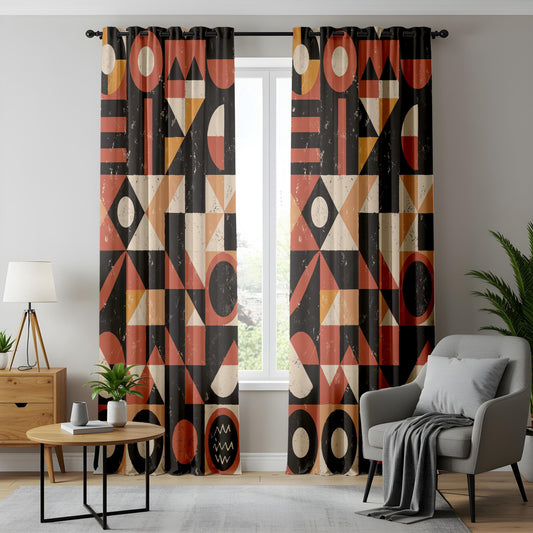
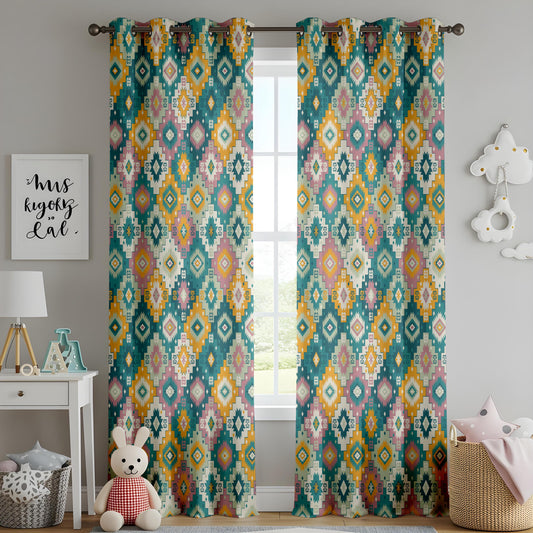
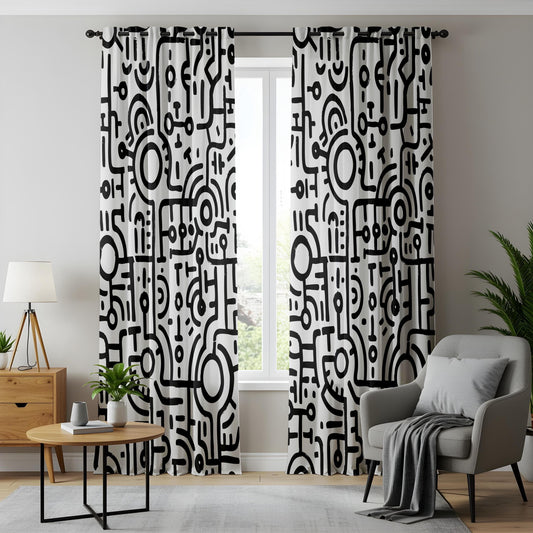
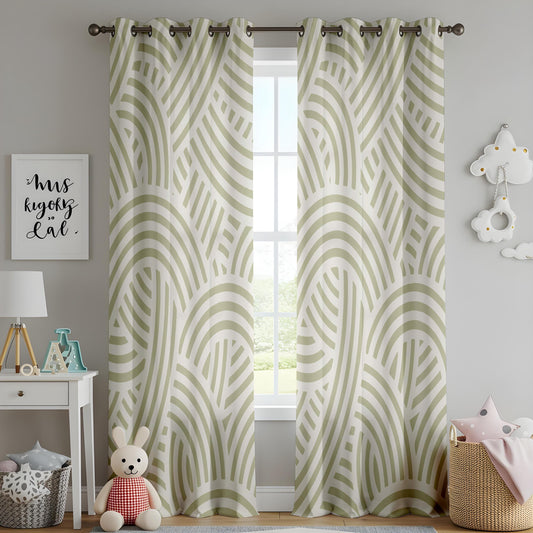
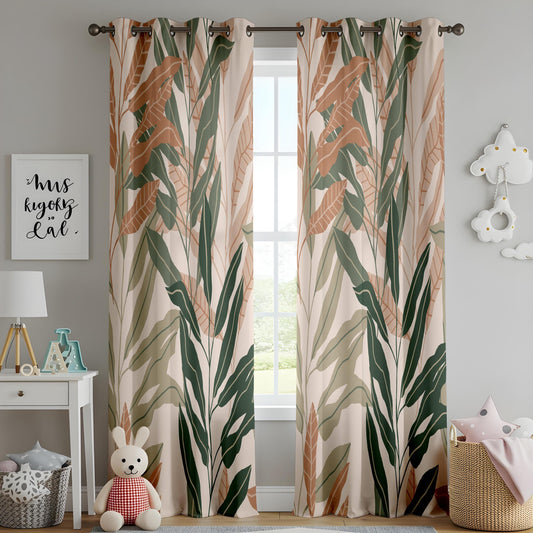
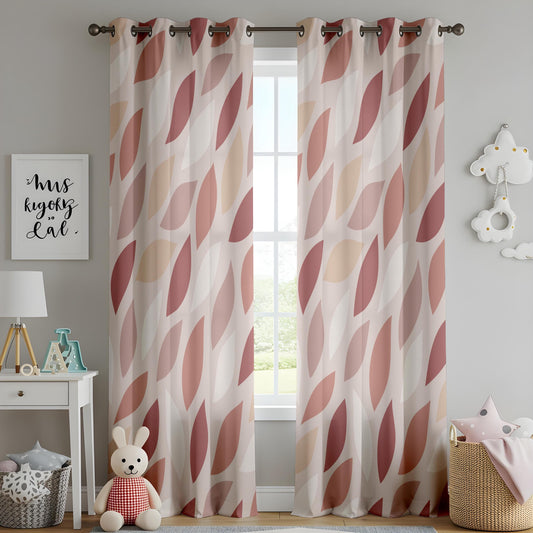
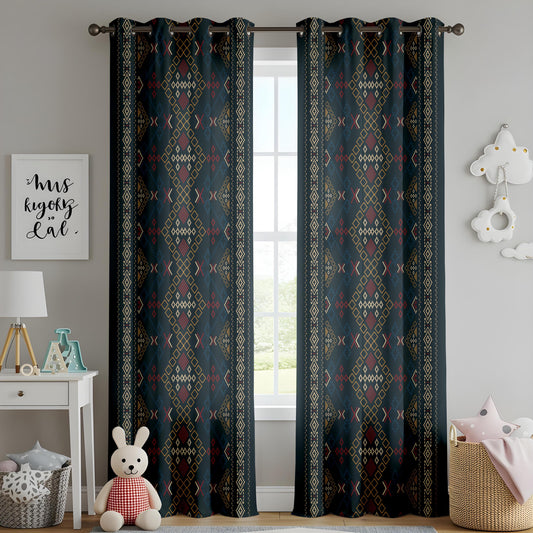
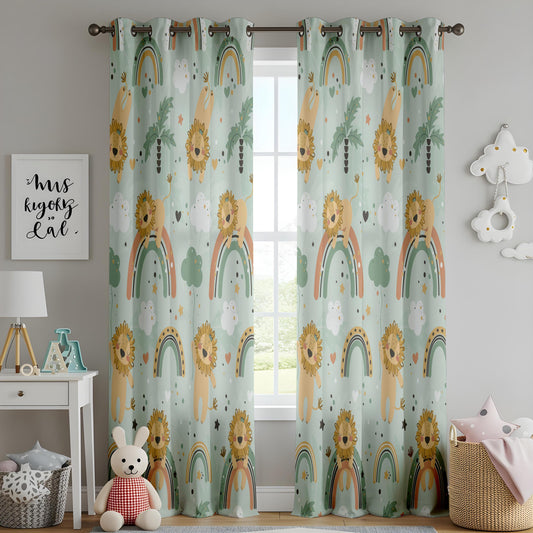
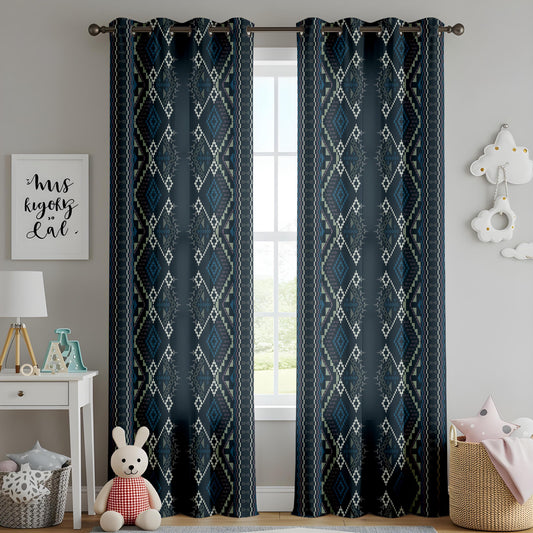
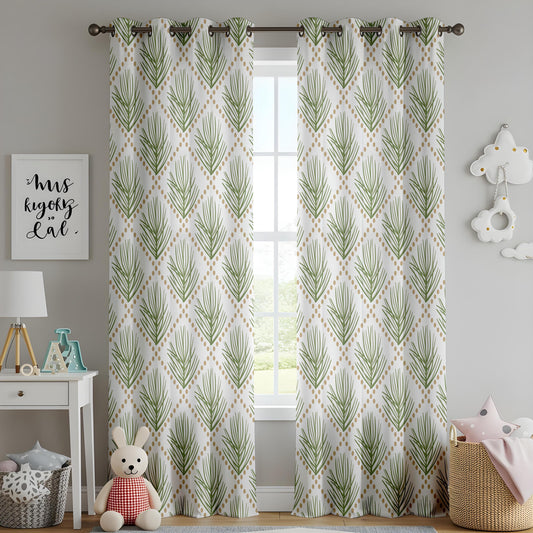
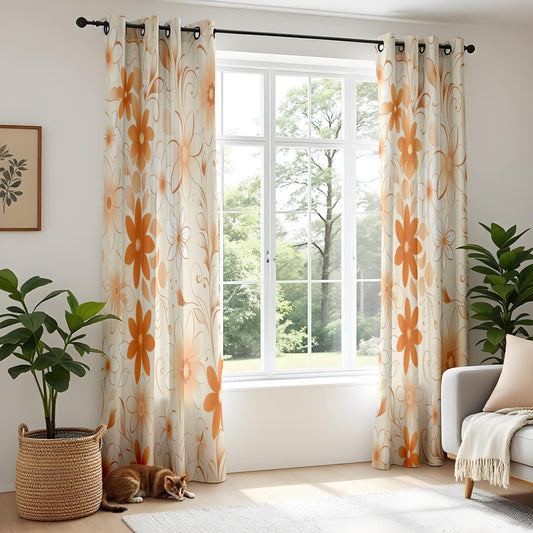
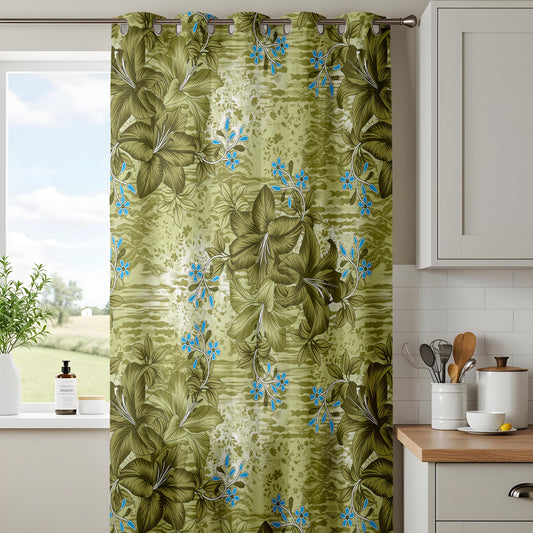
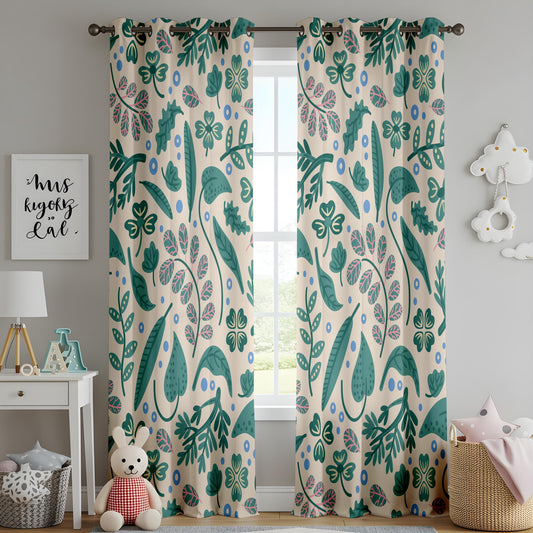
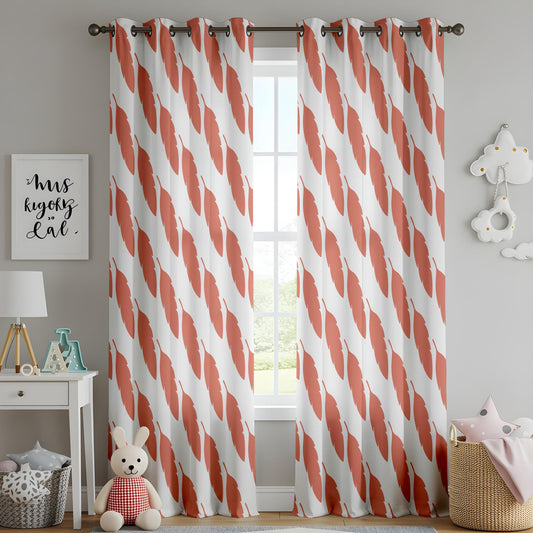
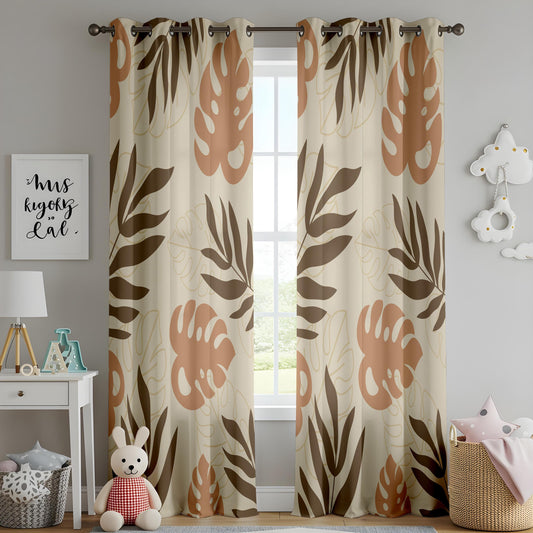
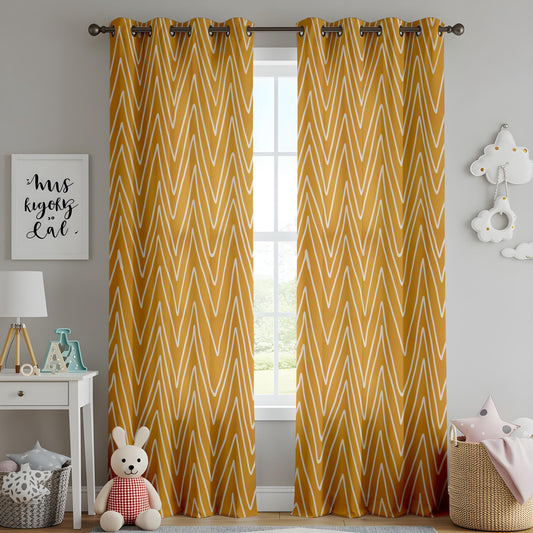
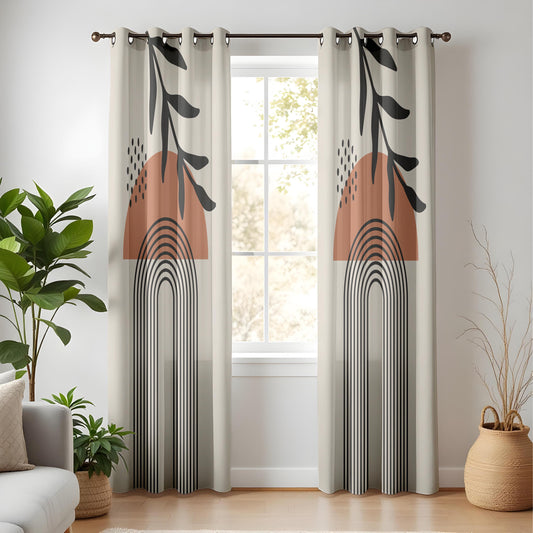
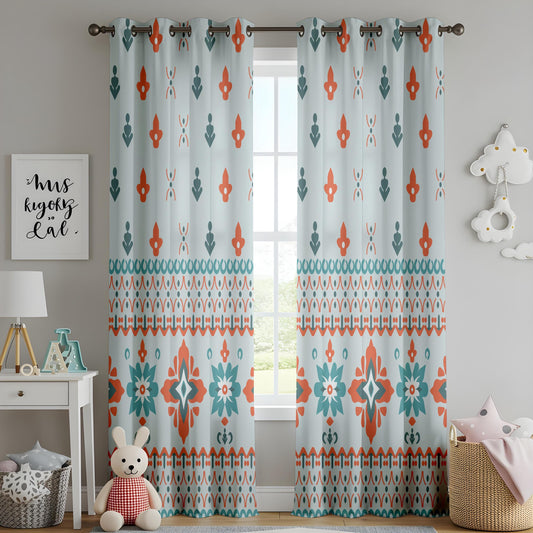
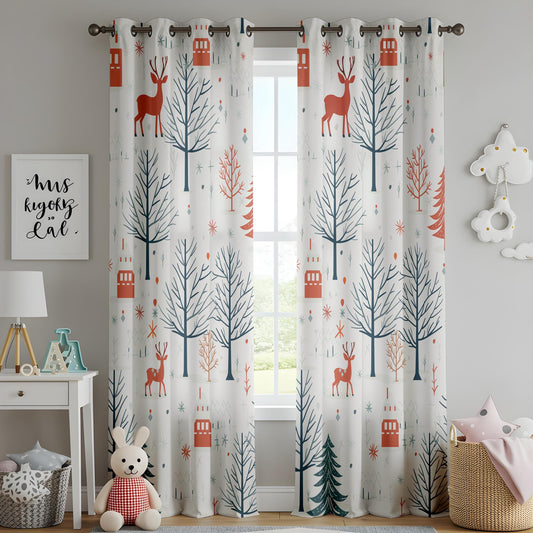
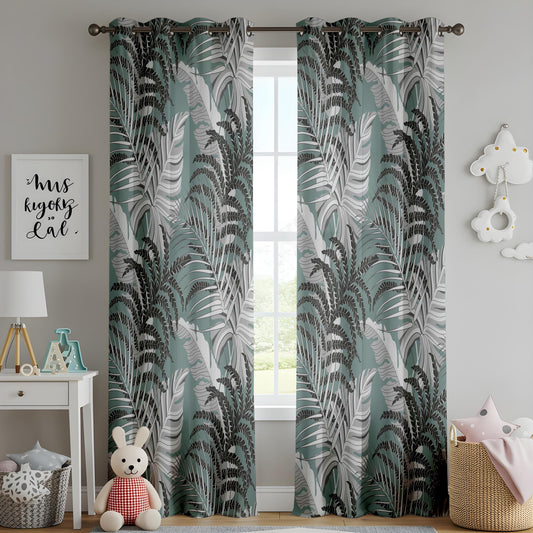
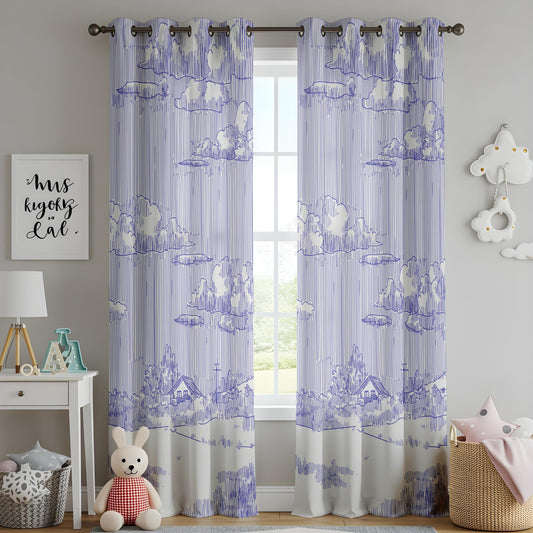
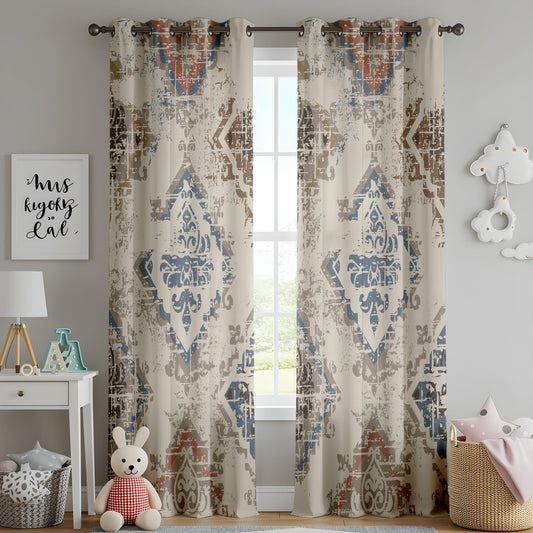
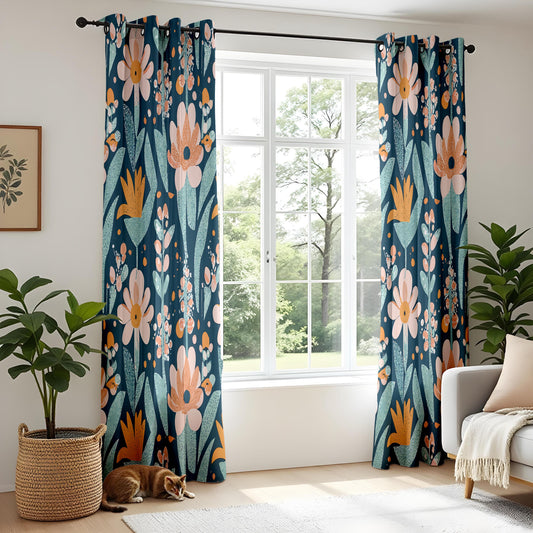
Boho curtains are about warmth and collected character rather than a single tidy style. Think block print marks, faded kilim geometry, mudcloth lines, mandalas, macrame textures and folk motifs borrowed from several traditions at once. The look works because it is not matched: things sit together because the colours agree, not because they came from the same place. Our boho collection leans on earthy palettes, terracotta, ochre, rust, indigo and warm cream, printed to your window measurements and finished unlined or with blackout or thermal blackout lining.
Why Boho Rooms Feel Relaxed
The defining feature of a boho interior is layering, and curtains are the largest single layer in most rooms. A patterned panel at the window immediately gives the space the collected, gathered over time quality that boho depends on. It also does something practical: a warm patterned curtain hides an unremarkable window and draws attention to the textiles instead of the architecture, which is useful in a plain rented flat or a new build.
-
Pattern that does not need to match. Boho tolerates and even rewards mixing, so your curtains do not have to coordinate with the rug or the cushions, only to share a warm palette.
-
Earthy colour is forgiving. Terracotta, ochre and clay work with wood, rattan, jute and plants, which are the materials most boho rooms already contain.
-
Softens plain architecture. A strongly patterned window makes a featureless room feel intentional and lived in.
Layering Without Losing Control
Boho tips into chaos when everything has equal weight. The way through is a hierarchy: one dominant pattern, two supporting ones, and a lot of plain texture in between. If the curtains are your dominant pattern, keep the sofa and the walls plain and let cushions and throws do the supporting work.
-
Living rooms. A bold kilim or block print at the window anchors the room. Repeat one colour from it in two cushions and stop there.
-
Bedrooms. Softer folk motifs on a cream ground keep the room restful. Blackout lining makes the print read strongly by day while keeping the room dark at night.
-
Conservatories and garden rooms. Unlined panels in a warm print filter sunlight beautifully and pair naturally with plants, rattan and unfinished wood.
-
Studios and creative spaces. This is the room to be brave in. Mixed motifs and saturated colour suit a space meant to feel energetic rather than restful.
Choosing the Right Lining
Every design in this collection is available with three lining options, so you can match the look to how the room is actually used.
-
Standard (Unlined): A single layer that lets daylight filter softly through the print. The colours stay luminous and the fabric hangs lightly, which makes it the natural choice for kitchens, dining rooms, hallways and any room where you want brightness rather than darkness.
-
Blackout Lining: An opaque backing layer bonded behind the printed face. It blocks external light almost entirely, so it is the option for bedrooms, nurseries, shift workers and home cinemas. It also adds body, giving the curtain a fuller, heavier fall.
-
Thermal Blackout Lining: Everything the blackout lining does, plus an insulating layer that slows heat loss through the glass in winter and reduces solar gain in summer. If you are trying to bring heating bills down or you have a draughty bay window, this is the one to choose.
Each design is also available as a single panel or a pair, in ten standard drops, so you can dress a narrow landing window and a wide living room bay from the same collection.
Made to Measure, Made to Order
Nothing in this collection sits in a warehouse waiting to be picked. Your fabric is printed and your curtains are sewn after you order, which is why the size and lining you choose are made exactly as specified rather than approximated from stock. Production takes 8-10 days, and delivery is free worldwide.
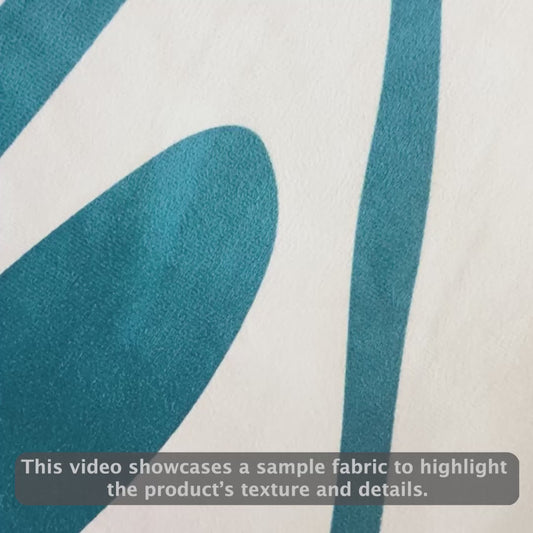
If you are torn between two designs, order fabric samples first. Screens shift colour, and a print that reads as soft sage on a phone can look considerably deeper against your own wall in your own light. A sample costs a fraction of a full order and removes the guesswork entirely.
Frequently Asked Questions About Boho Curtains
1. How do I keep a boho scheme from looking messy?
Limit the palette, not the pattern. Boho rooms that work usually run on four or five colours repeated across many different motifs. It is the shared colour that makes unmatched patterns look deliberate. Rooms that go wrong normally have too many colours rather than too many patterns.
2. Do boho curtains suit a modern flat?
They suit one particularly well, because a modern flat usually needs exactly what boho supplies: warmth, texture and a sense of history. Flat white walls and plain floors are a good background for a strongly patterned curtain. The contrast between clean architecture and a collected textile is the whole point rather than a conflict.
3. What colours define a boho palette?
Earth pigments, essentially: terracotta, ochre, rust, clay, olive, warm cream and indigo. They are the colours of natural dyes, which is why they look right alongside wood, jute, rattan and unbleached cotton. Cool greys and stark blue whites are the tones that tend to break the effect.
4. Should boho curtains be floor length or sill length?
Floor length, wherever the room allows it. Length is what gives a boho scheme its relaxed, draped quality, and a generous panel hanging to the floor looks softer than a short one. In kitchens and bathrooms where floor length is impractical, a sill length panel with plenty of fullness gives a similar effect on a smaller scale.
5. Can I mix a boho curtain with a patterned rug?
Yes, and it is close to obligatory in this style. Keep the scales apart, so a large motif at the window over a smaller repeat on the floor, and make sure the two share at least one colour. That single shared colour is what tells the eye the combination was chosen rather than accidental.
6. How do I measure my windows for made-to-measure curtains?
Use a metal tape measure, not fabric. Width: measure your pole or track, not the window, and let the pole extend 15cm to 30cm beyond the glass on each side so the curtains can stack back without blocking light. Drop: measure from the pole or track down to where you want the curtains to finish: 1cm above the sill, 15cm below the sill, or 1cm to 2cm off the floor for full length.
7. What is the difference between blackout and thermal blackout lining?
A blackout lining is about light: an opaque layer that stops daylight and streetlight coming through. A thermal blackout lining does the same job and adds an insulating layer that slows heat moving through the window, keeping rooms warmer in winter and cooler in summer. If your priority is sleep, blackout is enough. If it is comfort and energy bills, choose thermal blackout.
8. How should I clean my printed curtains?
Professional dry cleaning only. The printed face and the bonded blackout and thermal linings do not respond well to machine washing, which can shrink the fabric and separate the lining. Between cleans, a vacuum with the soft brush attachment on a low setting keeps dust from settling into the weave.
9. How long will my order take, and what does delivery cost?
Every order is printed and sewn from scratch, so allow 8-10 days for production. Delivery on curtains is free worldwide. Orders to the United States are sent DDP, meaning import taxes and duties are already covered and there is nothing to pay when the parcel arrives.
Explore more: Minimalist Curtains, Animal Print Curtains, Tropical Curtains, Green Curtains and Blue Curtains. Or narrow the choice by lining with Blackout Curtains and Thermal Curtains, or browse every design in Curtains.