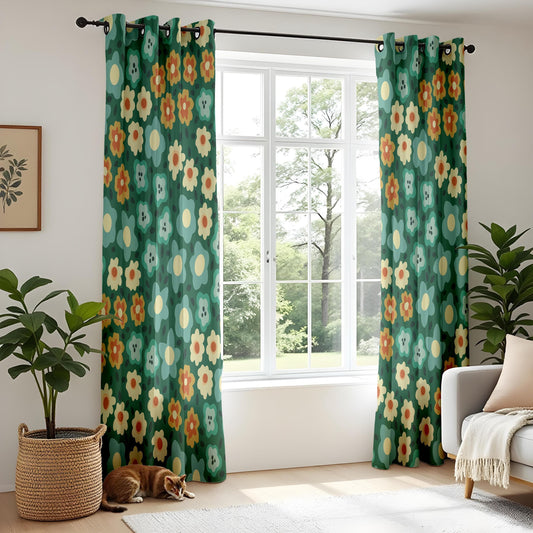
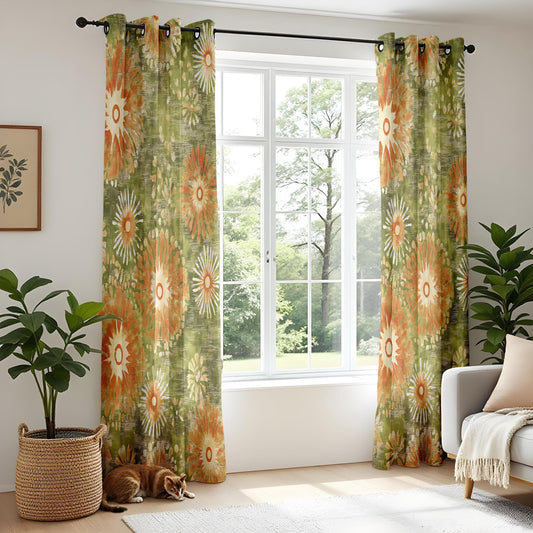
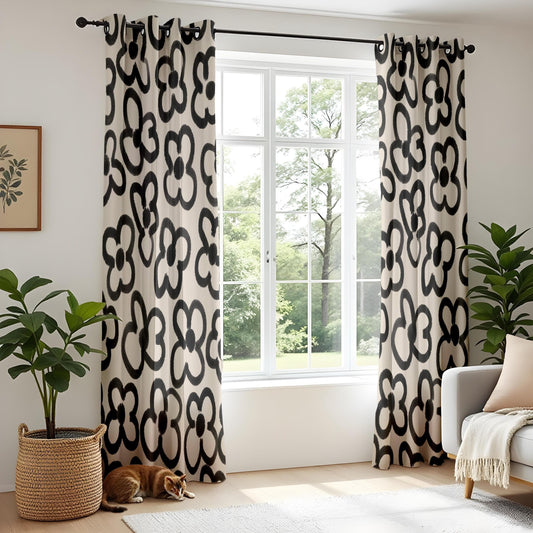
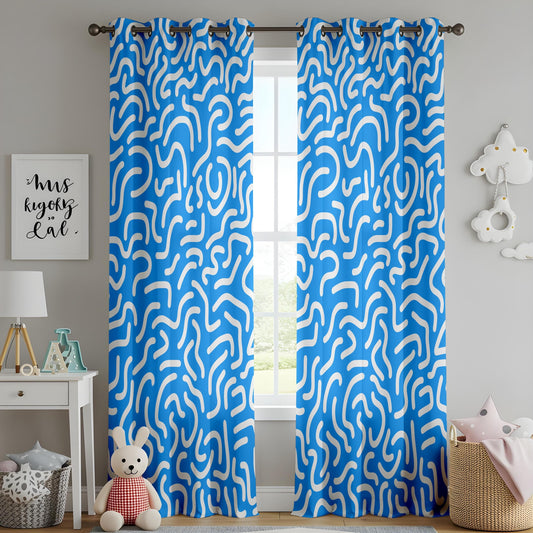
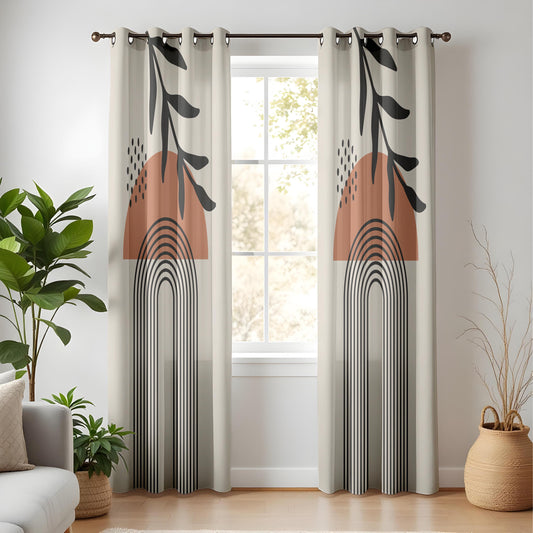
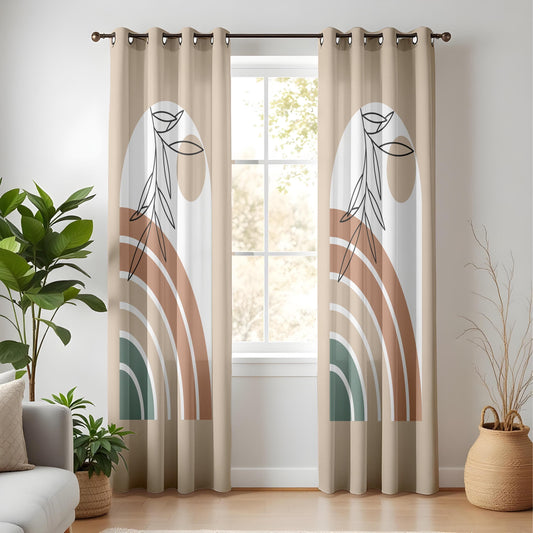
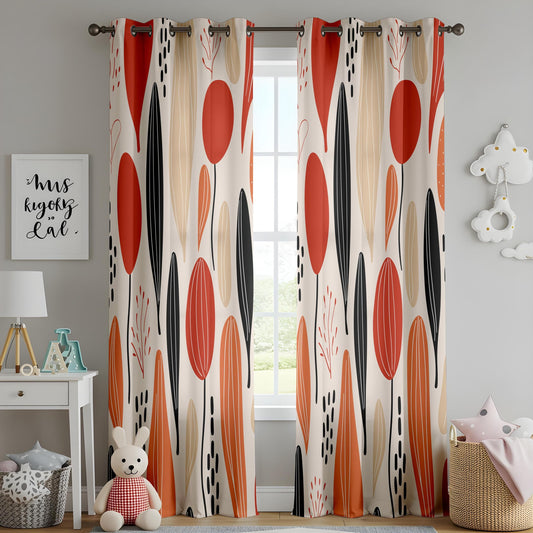
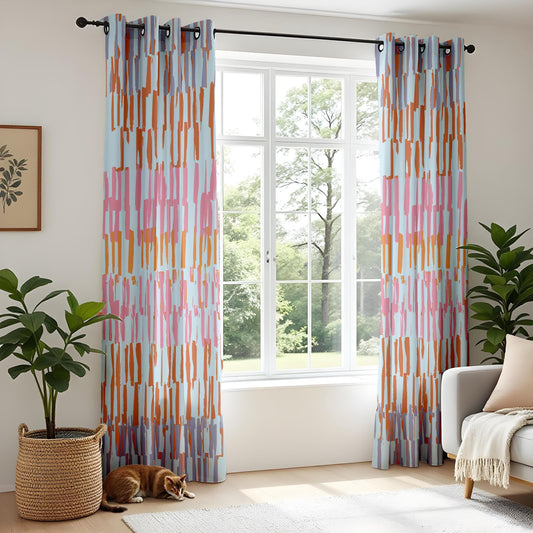
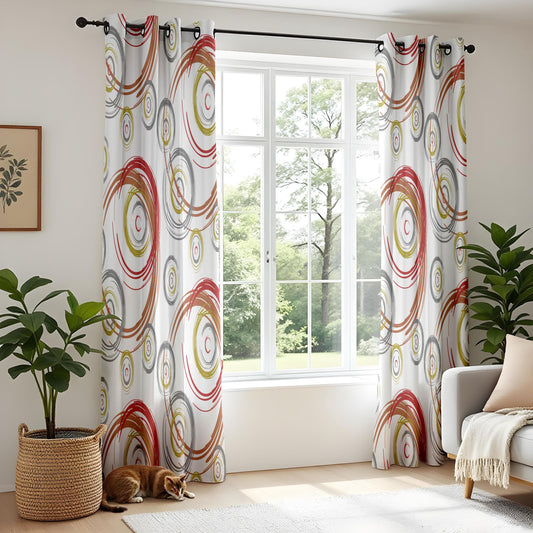
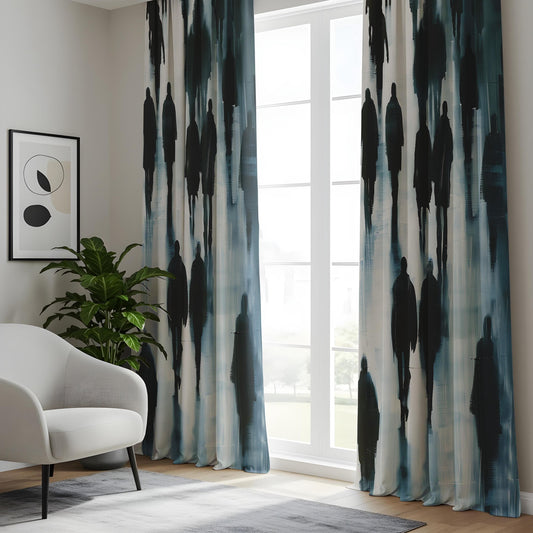
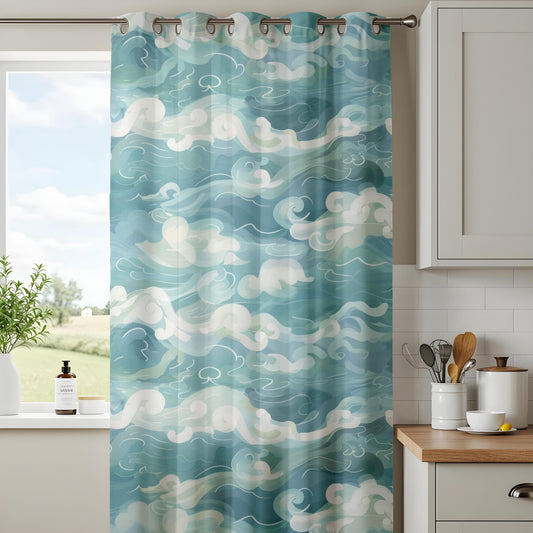
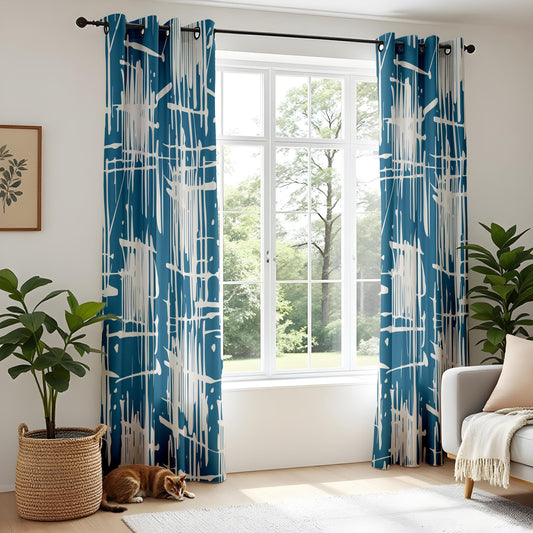
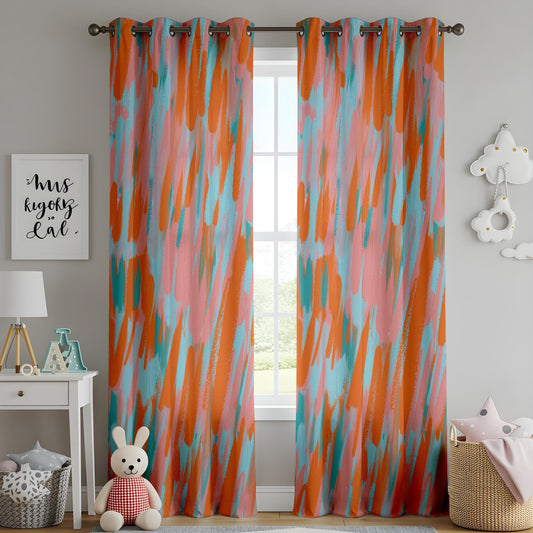
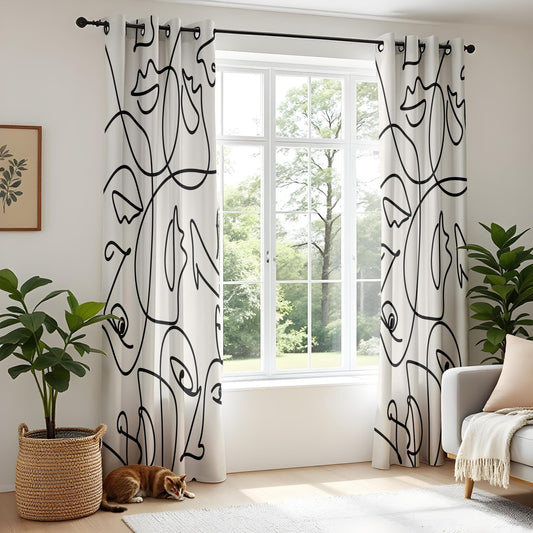
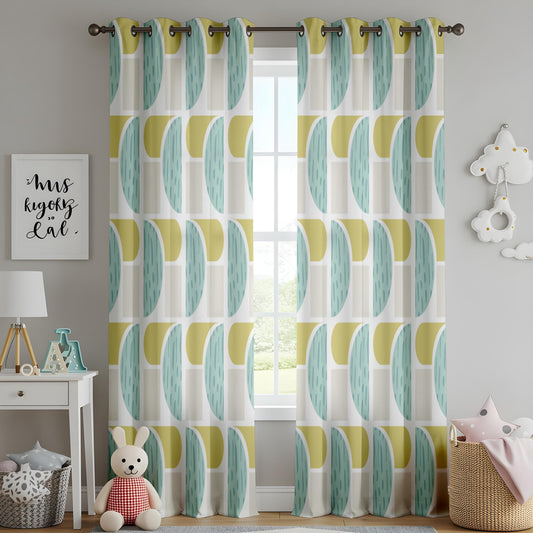
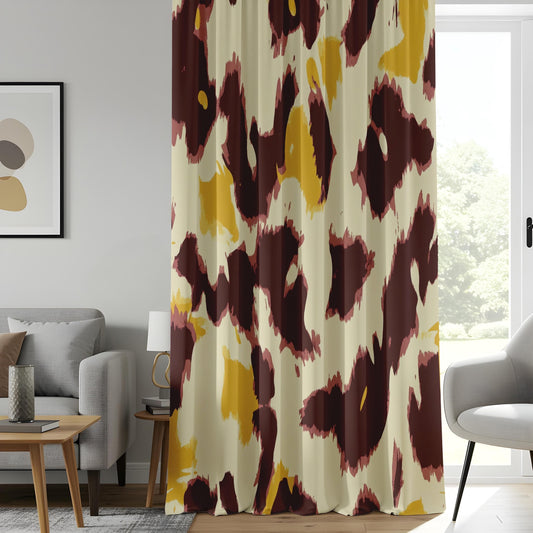
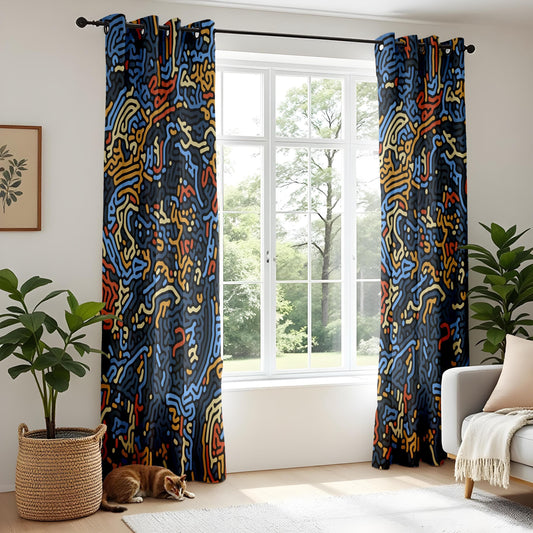
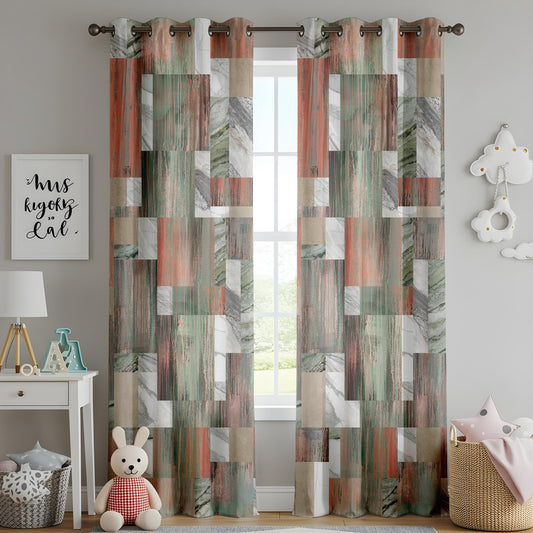
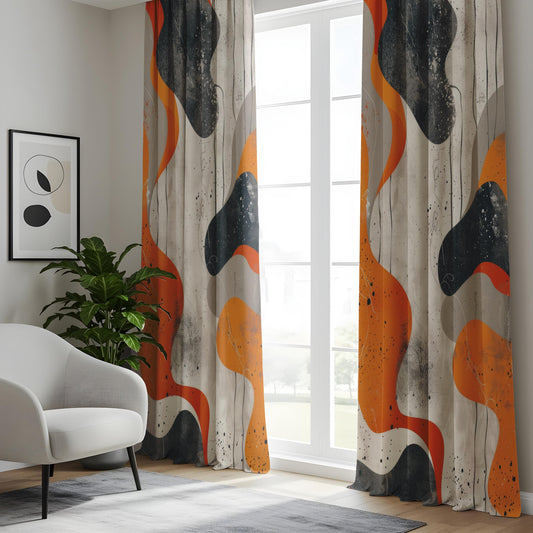
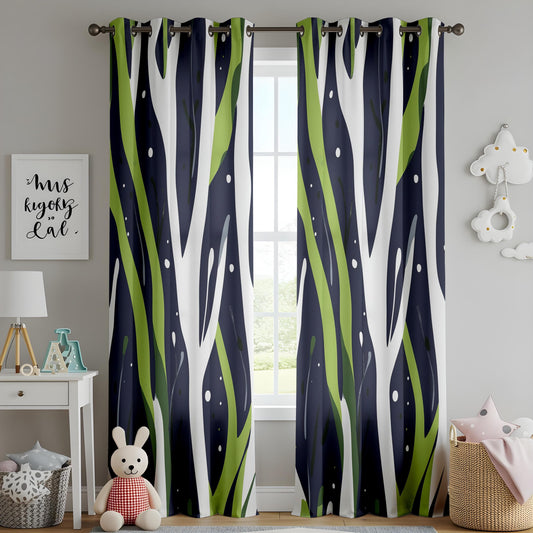
Thermal curtains do two jobs at once. They block light like any blackout curtain, and they slow the movement of heat through the glass, which is where a significant share of a home's warmth is lost. Every design in our curtain range can be ordered with thermal blackout lining, which is what this collection gathers together: the full catalogue of prints, available in ten sizes, as a single panel or a pair, made to your exact window measurements with free worldwide delivery.
How Thermal Lining Actually Works
Glass is the weakest thermal point in most rooms. In winter, warm air touching a cold pane cools, drops and pulls more warm air toward the window, so the room loses heat continuously even without a draught. A thermal lining puts an insulating layer between the room and that cold surface, which slows the exchange. In summer the same layer works in reverse, reflecting solar gain before it reaches the room.
-
Winter. Reduces heat loss at the window and cuts the cold downdraught that makes seating near a window uncomfortable.
-
Summer. Reflects solar heat on south and west facing windows, which keeps bedrooms usable on hot evenings.
-
All year. Blocks light completely, so the same curtain solves darkness and temperature together rather than needing two products.
Where Thermal Curtains Make the Biggest Difference
The benefit is proportional to how bad the window is. On a modern triple glazed unit the difference is modest. On a single glazed sash, a large bay or a patio door, it is immediately noticeable, both in comfort and in how long the room holds its heat after the heating goes off. Older properties with original windows are where thermal lining earns its cost fastest.
-
Single glazed and period windows. The clearest gain. A thermal lined curtain is far cheaper than replacing a sash and does not require consent in a listed or conservation property.
-
Large bays and patio doors. Big areas of glass lose the most heat, so the biggest absolute saving comes from the biggest window.
-
Bedrooms. Cold bedrooms are usually a window problem rather than a heating problem, and darkness matters here anyway.
-
Rooms over unheated spaces. Box rooms above garages and porches feel cold from two directions, and the window is the part you can fix easily.
Fitting Them So They Work
A thermal curtain only insulates the area it actually covers, so how it is hung matters as much as what it is made of. Fit the pole or track close to the ceiling or well above the frame, let the curtains extend 15cm to 30cm beyond the glass on each side, and choose a drop that reaches the floor or the sill closely. Gaps at the top and sides are where the warm air escapes, and closing them is free.
-
Hang high and wide. The curtain should cover the wall around the opening, not just the glass itself.
-
Close the top gap. A pelmet or a track fitted tight to the ceiling stops warm air travelling up behind the curtain and cooling against the glass.
-
Reach the sill or floor. A curtain stopping short of the sill lets the cooled air spill straight into the room.
-
Close them before dusk. Drawing curtains as the light goes, rather than at bedtime, keeps more of the day's heat in the room.
Frequently Asked Questions About Thermal Curtains
1. Do thermal curtains actually reduce heating bills?
They reduce heat loss at the window, and how much that is worth depends entirely on your windows. On single glazing or an old sash, the difference in comfort is obvious within a day and the room holds heat noticeably longer after the heating goes off. On modern double or triple glazing the gain is smaller, because the window is already insulated. The saving also depends on hanging them properly, since gaps at the top and sides undo much of the benefit.
2. What is the difference between blackout and thermal blackout lining?
Both block light. Thermal blackout adds an insulating layer that slows heat transfer through the window in both directions. If your only problem is a bedroom that is too bright in June, blackout is enough. If the room is also cold in winter or uncomfortably hot in summer, thermal blackout solves all three at once for a small additional cost.
3. Do thermal curtains help in summer as well as winter?
Yes, and on a south or west facing window it can be the more valuable direction. Closing thermal lined curtains during the hottest part of the afternoon reflects solar gain before it enters the room, which keeps a bedroom several degrees cooler by evening. This is the cheapest useful intervention available for a room that overheats.
4. Are thermal curtains heavier than standard ones?
They are heavier than an unlined panel, since there is an extra layer, and that weight is part of why they hang so well. It does mean the pole or track needs to be fixed properly into the wall rather than into plasterboard alone, particularly on a wide window. The extra body also improves the drape, which is a benefit most people notice before they notice the insulation.
5. Will the print still look good with thermal lining behind it?
It looks different rather than worse. With a lining behind it, the print reads as solid colour against daylight instead of glowing with light passing through it, which usually makes bold designs look more graphic and defined. The lining also protects the printed face from direct sunlight, which keeps the colours truer for longer on a south facing window.
6. Can I have thermal lining on any design in the range?
Yes. Thermal blackout is offered as a lining option on every curtain we print, in all ten sizes and as either a single panel or a pair. You are not restricted to a separate thermal range, so the choice of print and the choice of performance are completely independent of one another.
7. How should I clean thermal curtains?
Professional dry cleaning only. Machine washing can separate the bonded lining from the face fabric and shrink the two layers at different rates, which permanently distorts the curtain. Between cleans, vacuum with a soft brush attachment on a low setting to stop dust settling into the fabric.
Explore more: Floral Curtains, Botanical Curtains, Abstract Curtains, Green Curtains and Blue Curtains. The same prints are also offered with Blackout Curtains, and every design sits in Curtains.