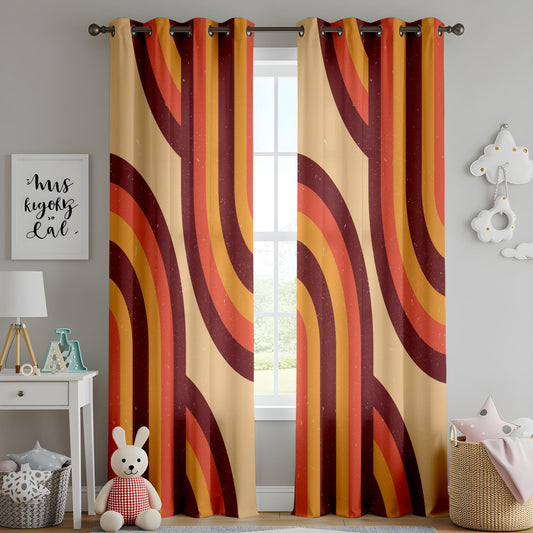
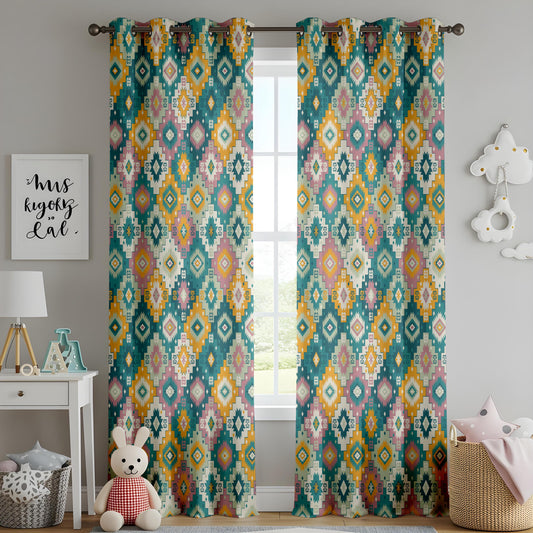
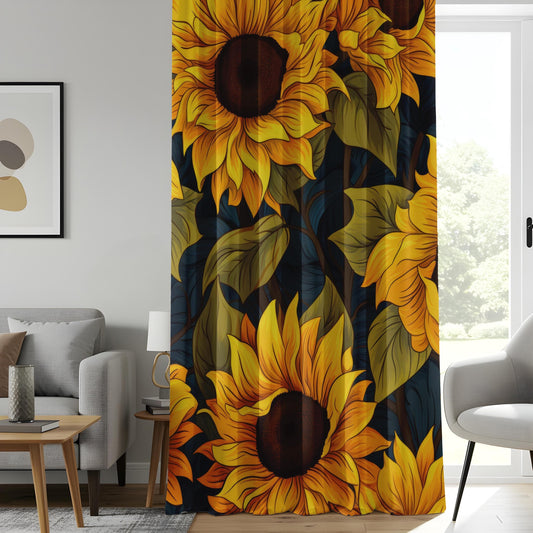
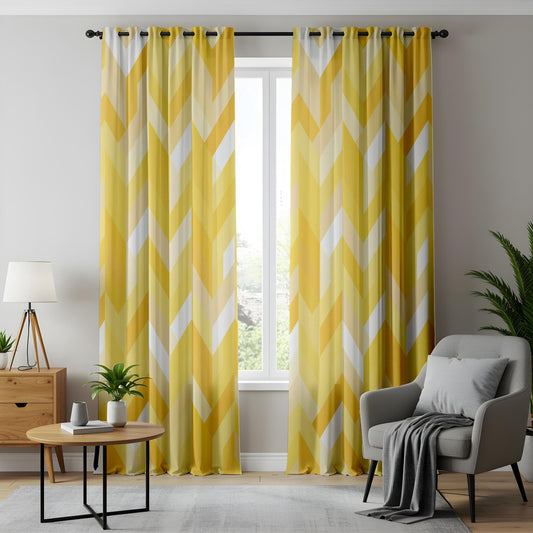
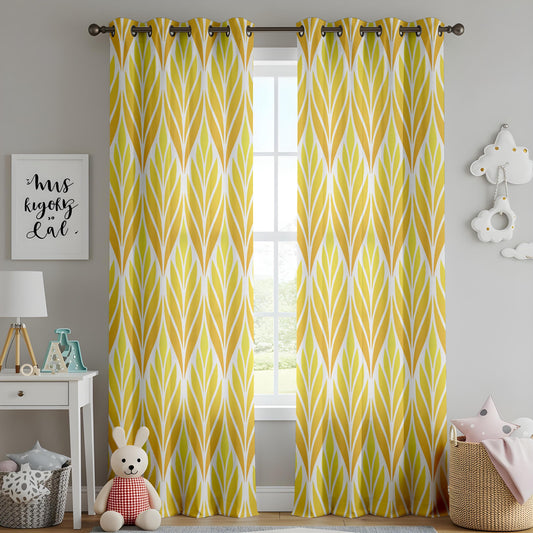
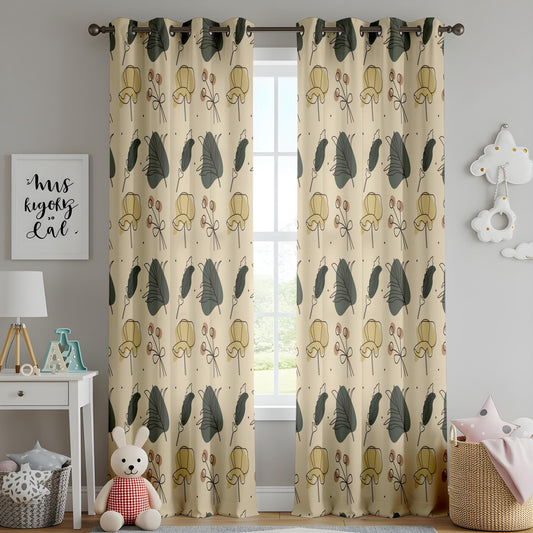
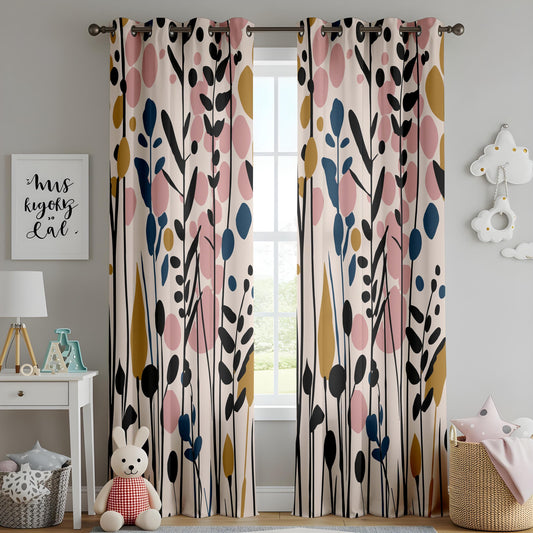
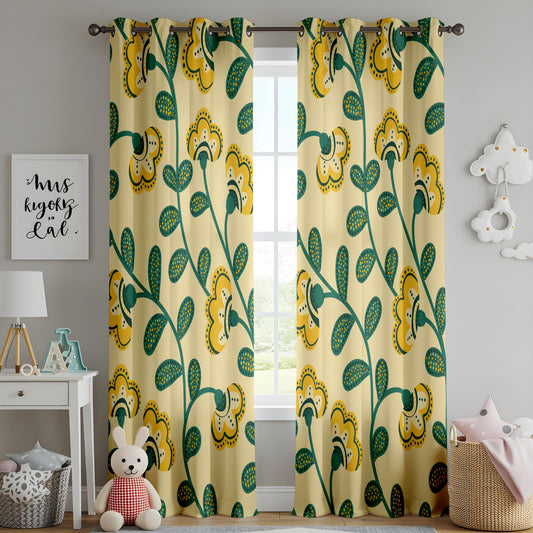
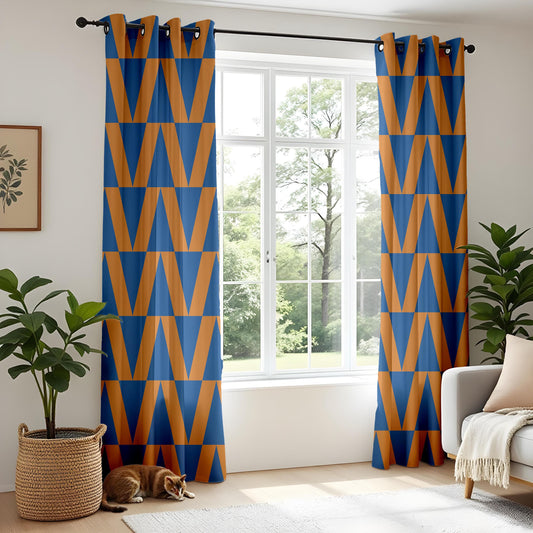
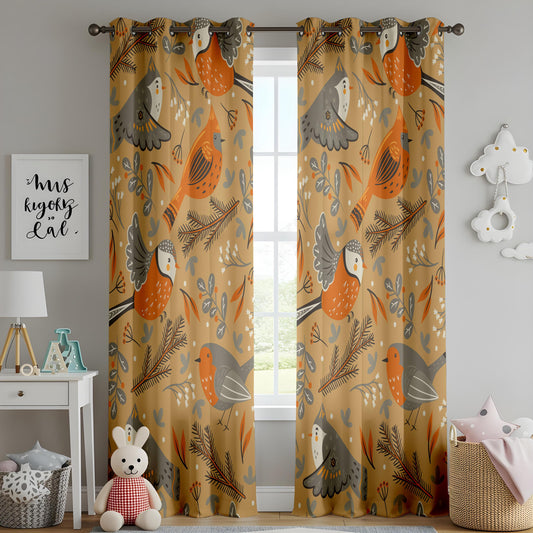
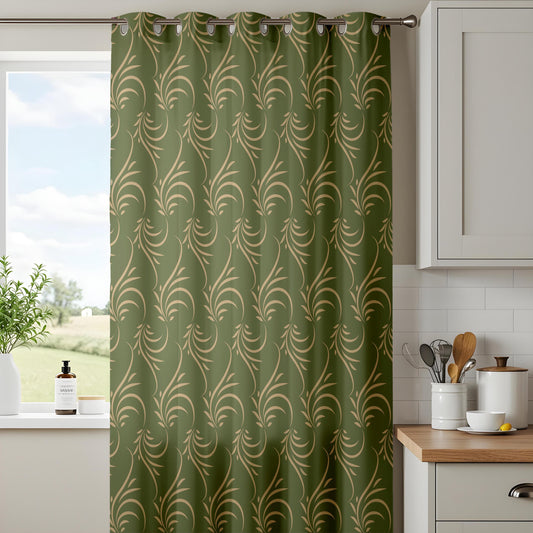
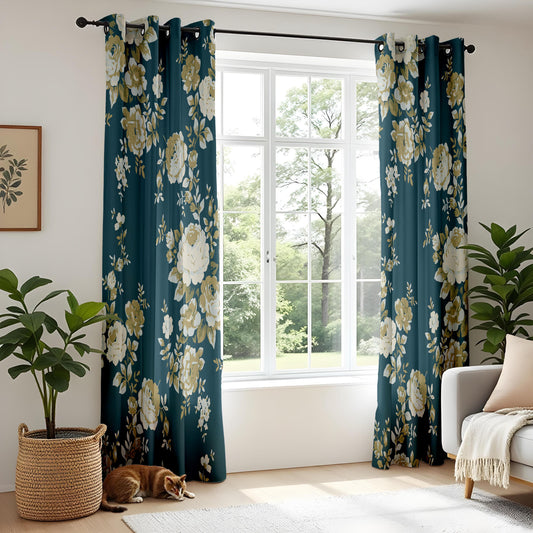
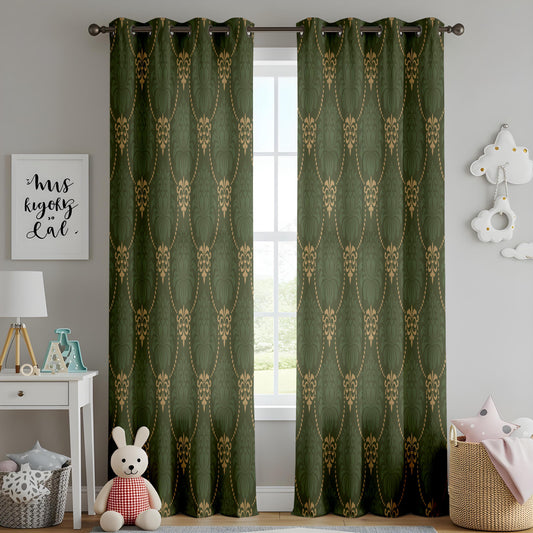
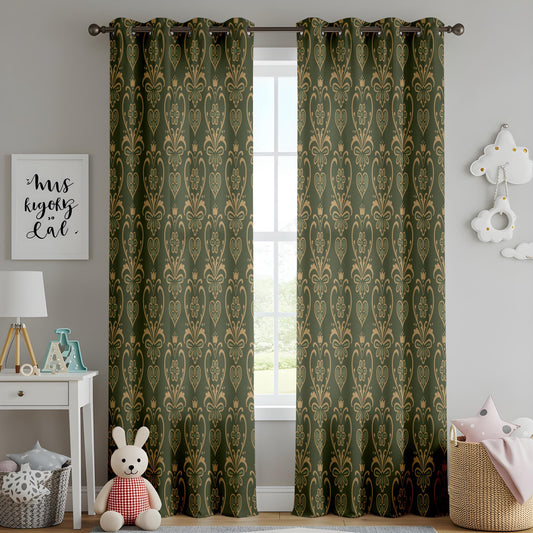
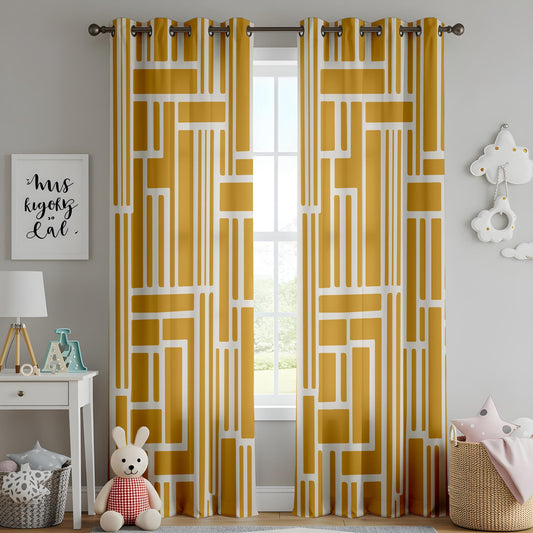
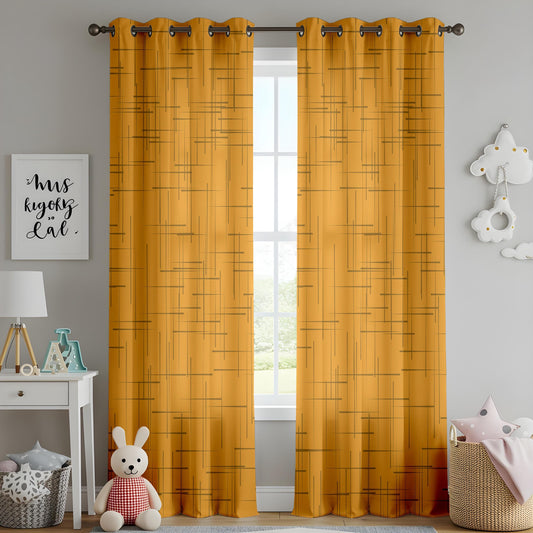
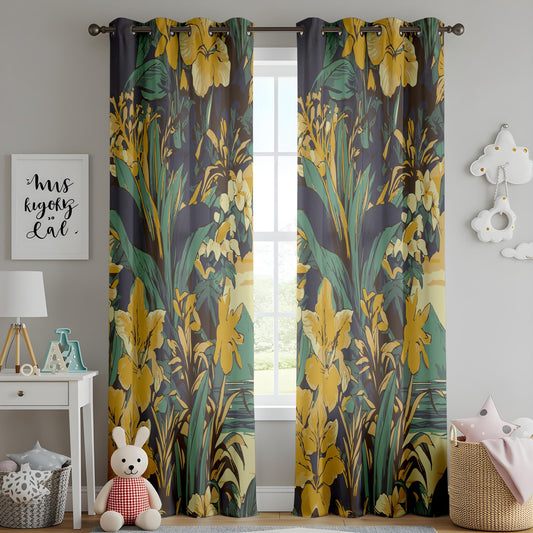
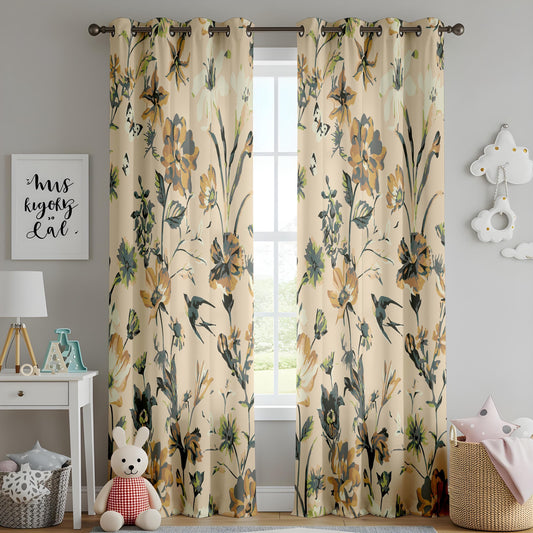
Yellow is the colour people are most nervous about and most pleased with once it is up. It is the closest thing in a paint or fabric range to daylight itself, which is why a yellow curtain can lift a dull room in a way that no neutral manages. This collection runs from soft butter and primrose through ochre and mustard to full saffron, in florals, geometrics and abstracts. Every design is printed to your window measurements and available unlined, with blackout lining or with thermal blackout lining.
What Yellow Does to a Room
Yellow reflects more light than any other hue at the same depth of tone. In practice that means a yellow curtain does not just add colour, it redistributes light: daylight passing through or bouncing off the fabric carries a warm cast into the room. This is genuinely useful in British houses, where north facing rooms and short winter days leave a lot of interiors looking grey for months at a time.
-
Warms cold light. The single most effective colour for a north facing room, where daylight arrives flat and blue.
-
Reads as energy rather than calm. Better suited to kitchens, hallways, studies and living rooms than to bedrooms, where restfulness usually matters more.
-
Ranges enormously. Pale primrose behaves almost like a warm neutral. Mustard and ochre behave like a strong accent. They are not interchangeable.
Choosing the Right Yellow for Your Room
The mistake with yellow is choosing the shade on screen. Yellow shifts more dramatically under artificial light than any other colour: a mustard that looks sophisticated in daylight can turn green under warm LED bulbs. Order a sample and look at it in the evening as well as the morning before you commit to a full drop.
-
Living rooms. Ochre and mustard sit beautifully with grey, charcoal and walnut. They give a neutral scheme a centre of gravity without needing any other colour.
-
Kitchens and breakfast rooms. Brighter yellows suit rooms used in the morning. Unlined panels let the colour glow when the sun is behind them.
-
Studies and home offices. Yellow is stimulating rather than restful, which is exactly what a working room wants. Keep it to the window and leave the walls quiet.
-
Bedrooms. If you want yellow here, choose the palest end of the range and pair it with blackout lining, so the room reads warm by day and goes properly dark at night.
Choosing the Right Lining
Every design in this collection is available with three lining options, so you can match the look to how the room is actually used.
-
Standard (Unlined): A single layer that lets daylight filter softly through the print. The colours stay luminous and the fabric hangs lightly, which makes it the natural choice for kitchens, dining rooms, hallways and any room where you want brightness rather than darkness.
-
Blackout Lining: An opaque backing layer bonded behind the printed face. It blocks external light almost entirely, so it is the option for bedrooms, nurseries, shift workers and home cinemas. It also adds body, giving the curtain a fuller, heavier fall.
-
Thermal Blackout Lining: Everything the blackout lining does, plus an insulating layer that slows heat loss through the glass in winter and reduces solar gain in summer. If you are trying to bring heating bills down or you have a draughty bay window, this is the one to choose.
Each design is also available as a single panel or a pair, in ten standard drops, so you can dress a narrow landing window and a wide living room bay from the same collection.
Made to Measure, Made to Order
Nothing in this collection sits in a warehouse waiting to be picked. Your fabric is printed and your curtains are sewn after you order, which is why the size and lining you choose are made exactly as specified rather than approximated from stock. Production takes 8-10 days, and delivery is free worldwide.
If you are torn between two designs, order fabric samples first. Screens shift colour, and a print that reads as soft sage on a phone can look considerably deeper against your own wall in your own light. A sample costs a fraction of a full order and removes the guesswork entirely.
Frequently Asked Questions About Yellow Curtains
1. Will yellow curtains make my room look dated?
The shade decides it, not the colour. The yellows that feel dated are the ones tied to a specific period, such as the acid lemon of the 1970s or the sunflower yellow of 1990s kitchens. Ochre, mustard, saffron and pale primrose are historic pigment colours that have been in continuous use for centuries and read as current rather than nostalgic.
2. What colours work with yellow curtains?
Grey and charcoal are the reliable partners, because they cool the yellow down and stop it dominating. Navy is the bolder option and produces a much sharper, more graphic room. Warm woods, walnut and oak in particular, flatter every shade of yellow. The combination to avoid is yellow with a strong pink or orange, as they compete rather than support one another.
3. Are yellow curtains a bad idea in a bedroom?
Bright yellow is stimulating, which works against a room meant for sleep. But the pale end of the range behaves quite differently: primrose and butter read as warm neutrals and are restful. If you want stronger yellow in a bedroom, put it on a print with a cream or white ground so the colour appears in the motif rather than across the whole panel.
4. Does yellow fade faster in sunlight?
Yellow pigments are no more fragile than others, but fading is more visible on light colours because there is less depth of tone to lose. On a south or west facing window, choosing blackout or thermal blackout lining protects the printed face by taking the direct exposure itself, which noticeably extends how long the colour stays true.
5. How much yellow is too much?
A useful test is whether the yellow appears in at least two other places in the room but never in more than about a quarter of the visible surfaces. Curtains plus two cushions is comfortable. Curtains plus cushions plus a rug plus a painted wall starts to feel relentless, because yellow does not recede the way blue or green does.
6. How do I measure my windows for made-to-measure curtains?
Use a metal tape measure, not fabric. Width: measure your pole or track, not the window, and let the pole extend 15cm to 30cm beyond the glass on each side so the curtains can stack back without blocking light. Drop: measure from the pole or track down to where you want the curtains to finish: 1cm above the sill, 15cm below the sill, or 1cm to 2cm off the floor for full length.
7. What is the difference between blackout and thermal blackout lining?
A blackout lining is about light: an opaque layer that stops daylight and streetlight coming through. A thermal blackout lining does the same job and adds an insulating layer that slows heat moving through the window, keeping rooms warmer in winter and cooler in summer. If your priority is sleep, blackout is enough. If it is comfort and energy bills, choose thermal blackout.
8. How should I clean my printed curtains?
Professional dry cleaning only. The printed face and the bonded blackout and thermal linings do not respond well to machine washing, which can shrink the fabric and separate the lining. Between cleans, a vacuum with the soft brush attachment on a low setting keeps dust from settling into the weave.
9. How long will my order take, and what does delivery cost?
Every order is printed and sewn from scratch, so allow 8-10 days for production. Delivery on curtains is free worldwide. Orders to the United States are sent DDP, meaning import taxes and duties are already covered and there is nothing to pay when the parcel arrives.
Explore more: Red Curtains, Pink Curtains, Purple Curtains, Floral Curtains and Botanical Curtains. Or narrow the choice by lining with Blackout Curtains and Thermal Curtains, or browse every design in Curtains.