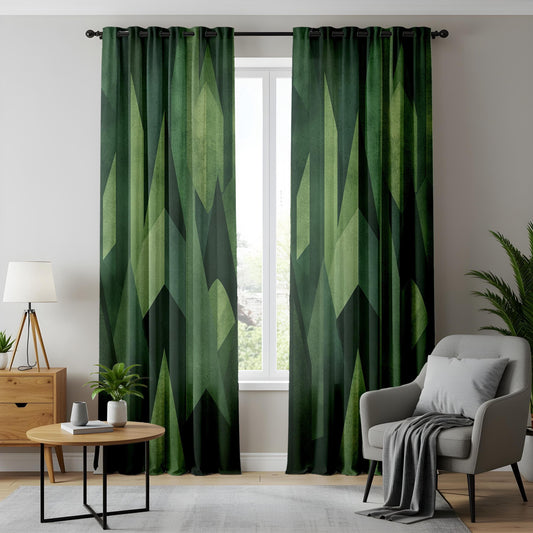
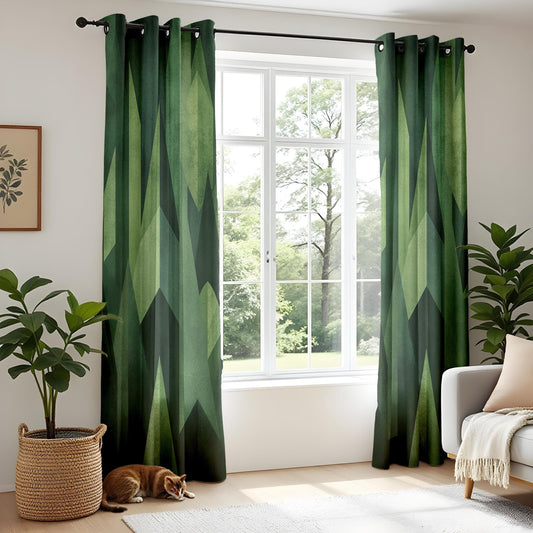
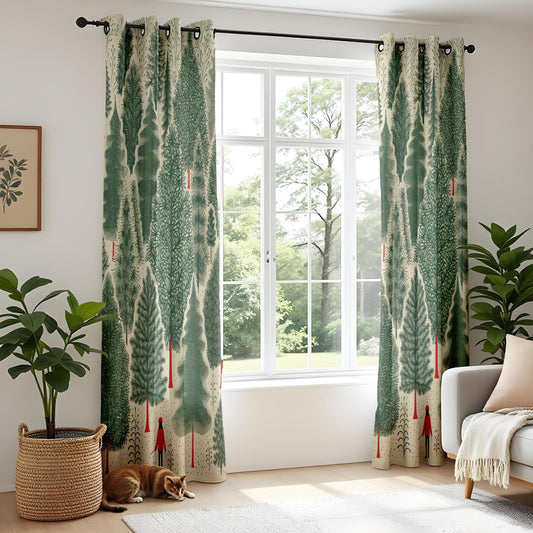
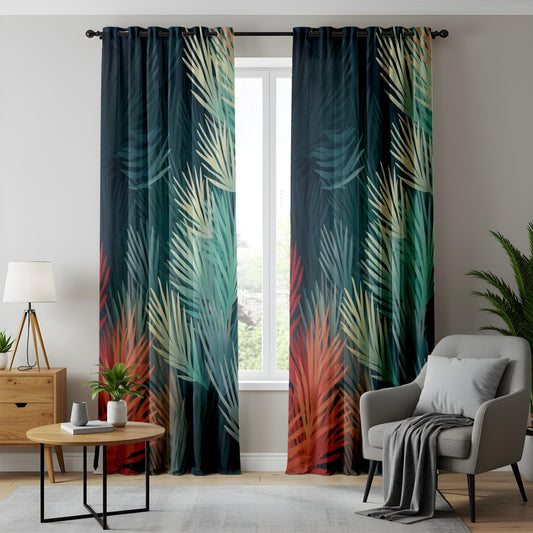
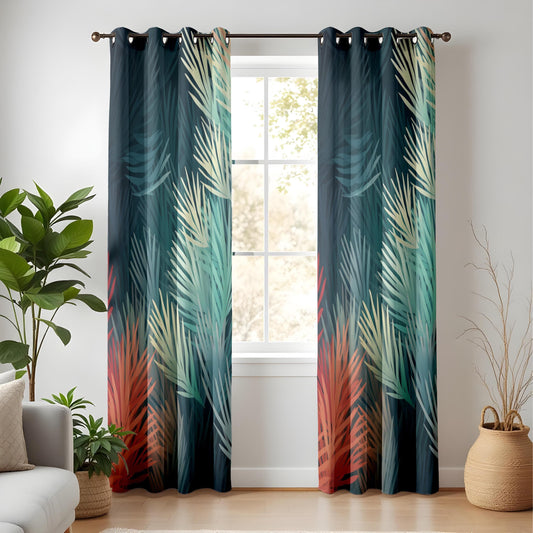
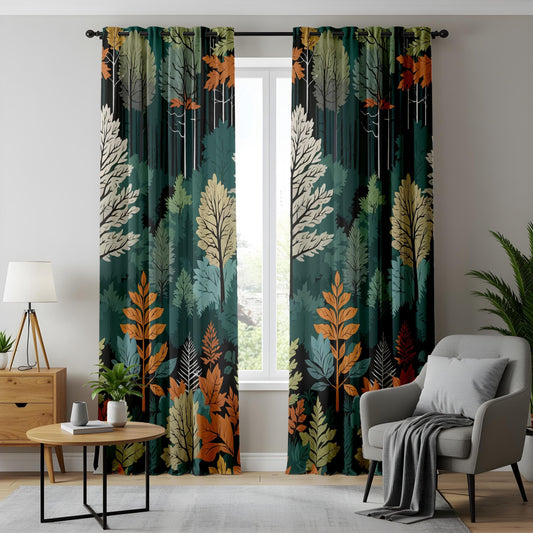
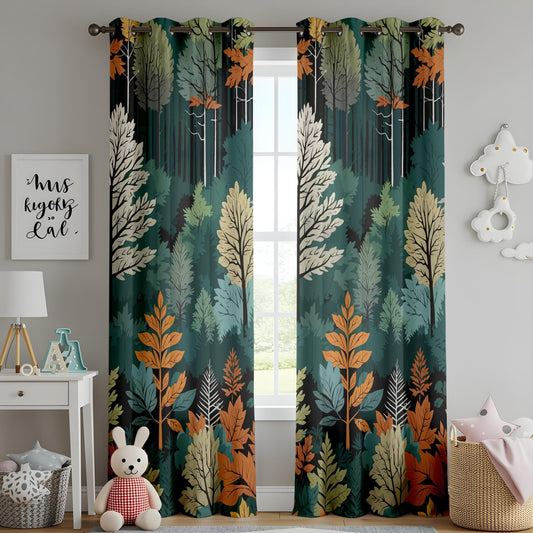
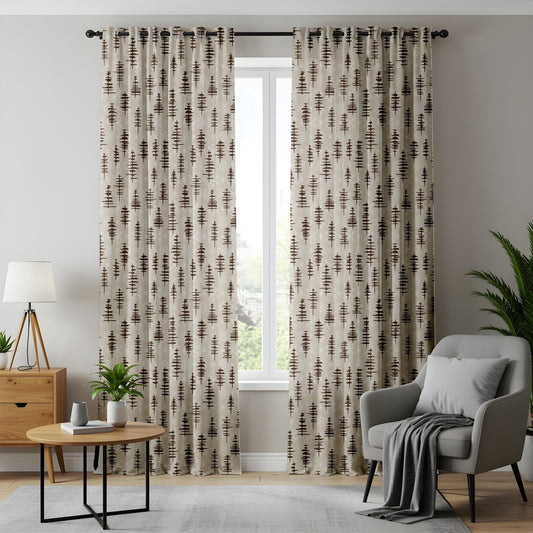
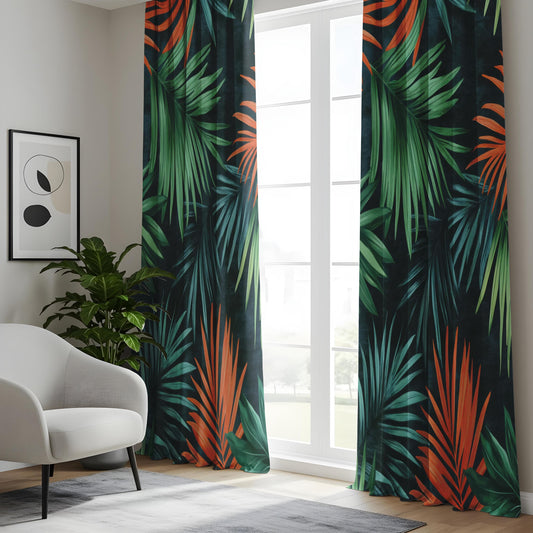
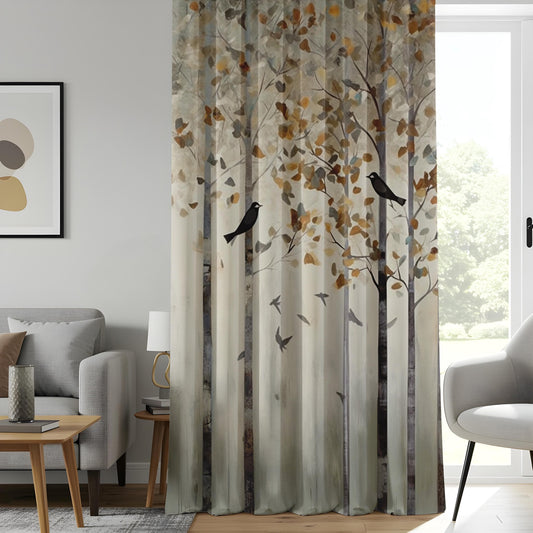
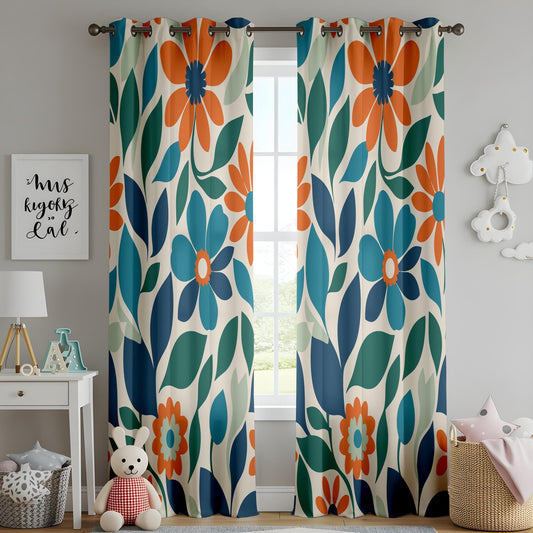
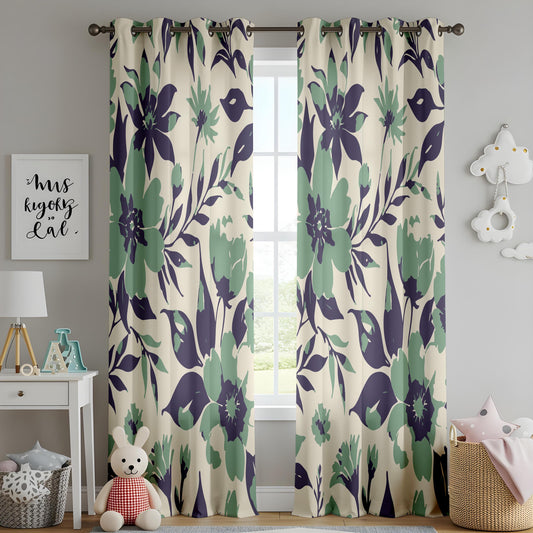
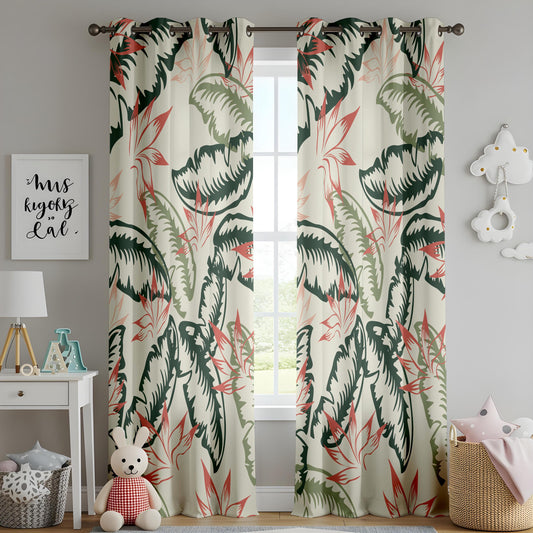
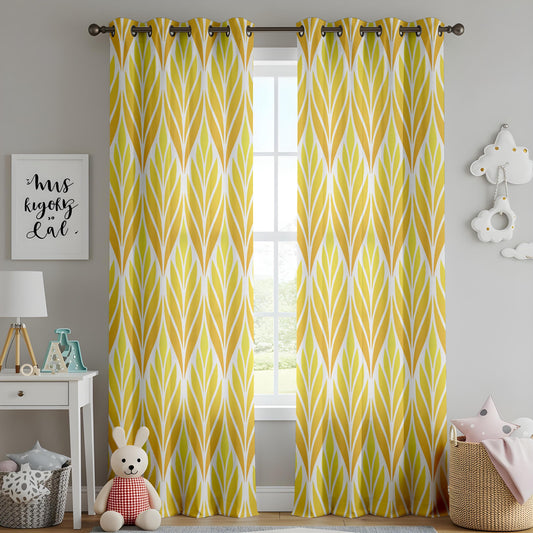
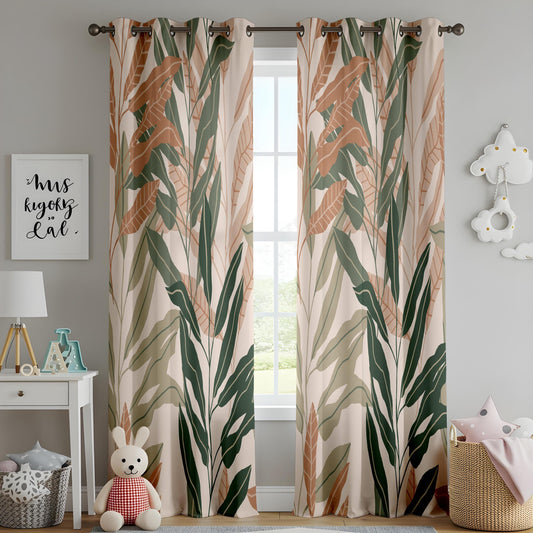
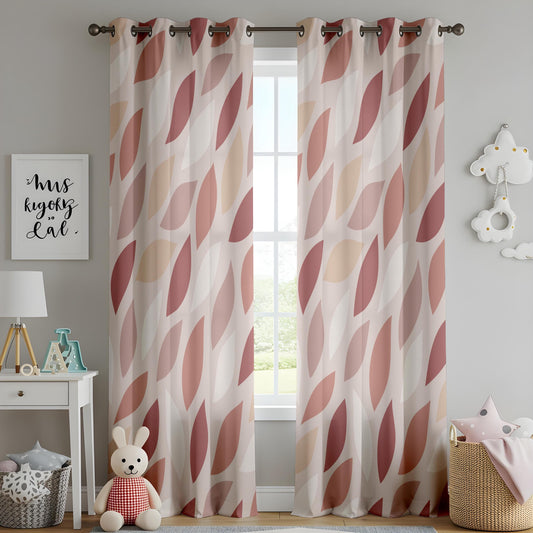
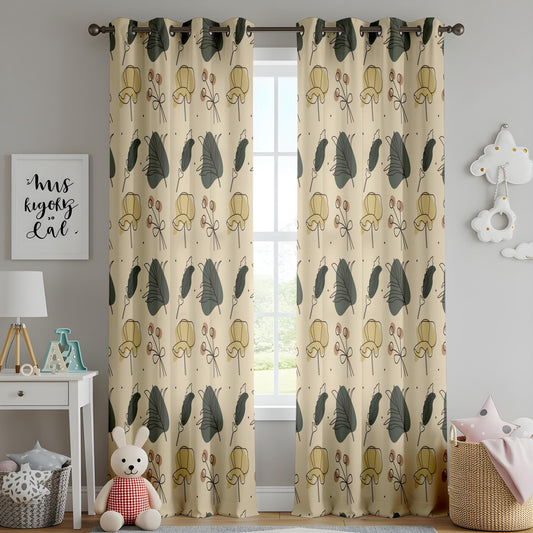
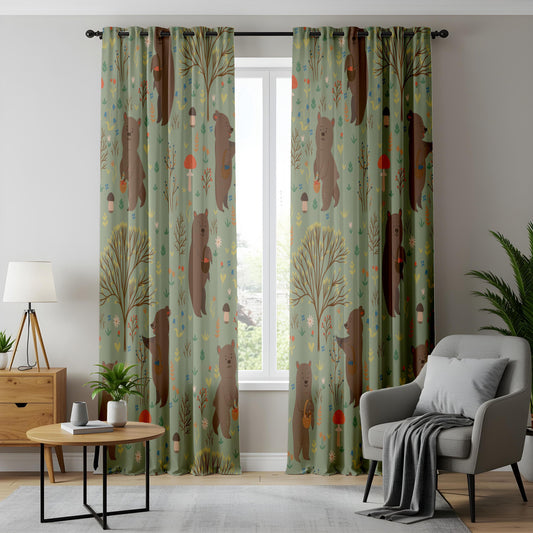
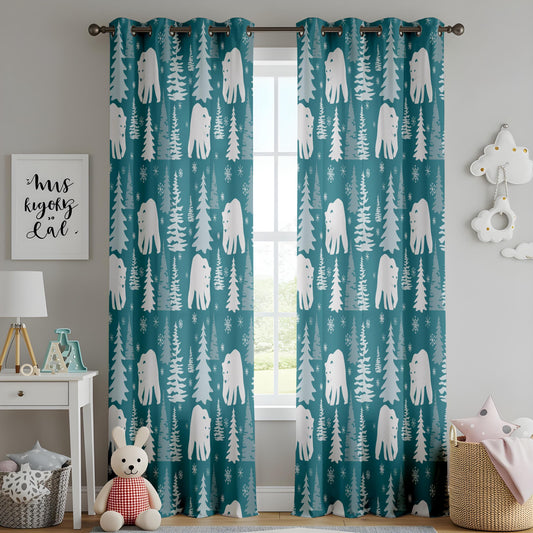
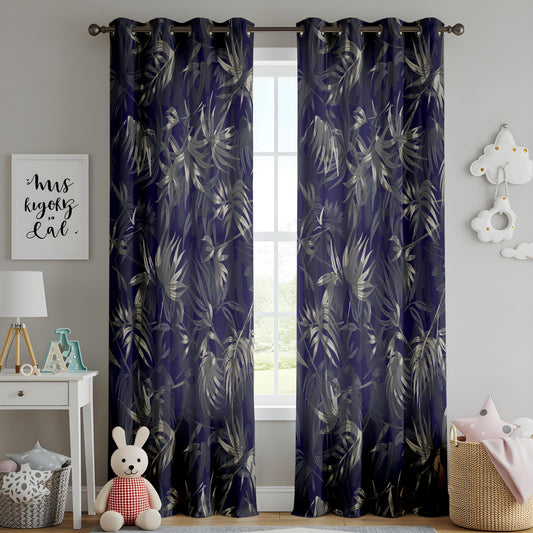
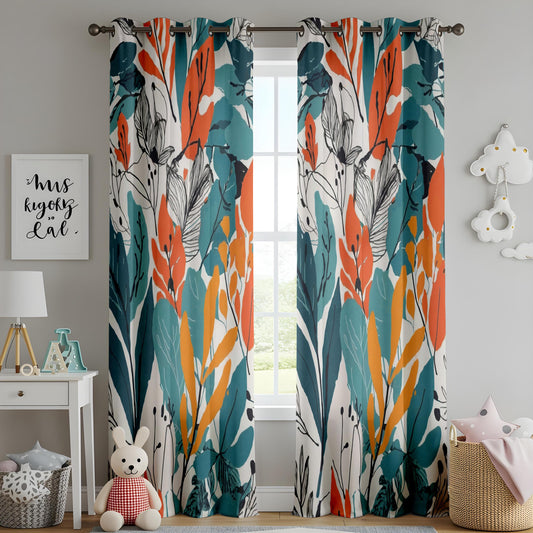
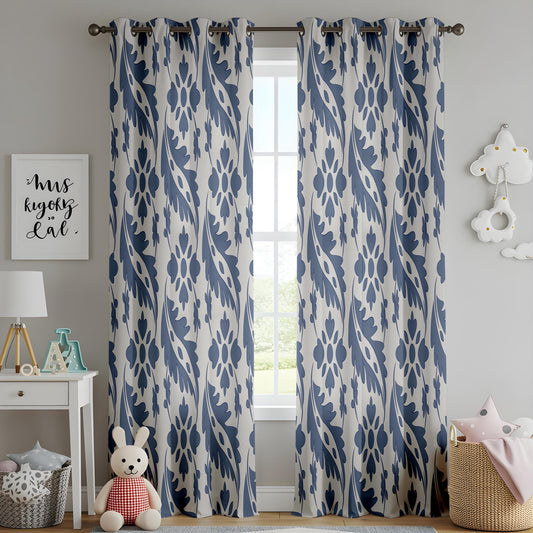
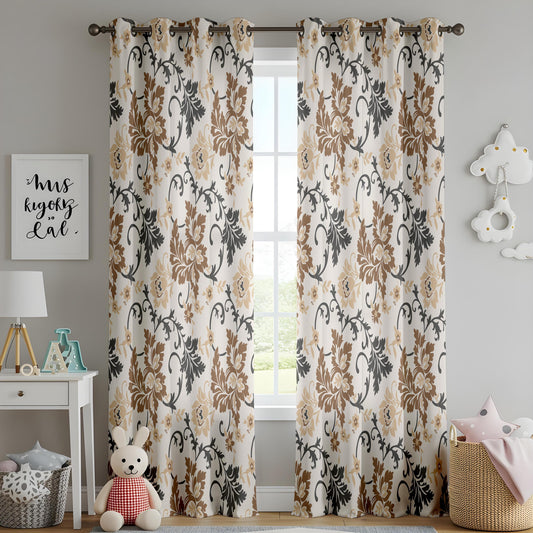
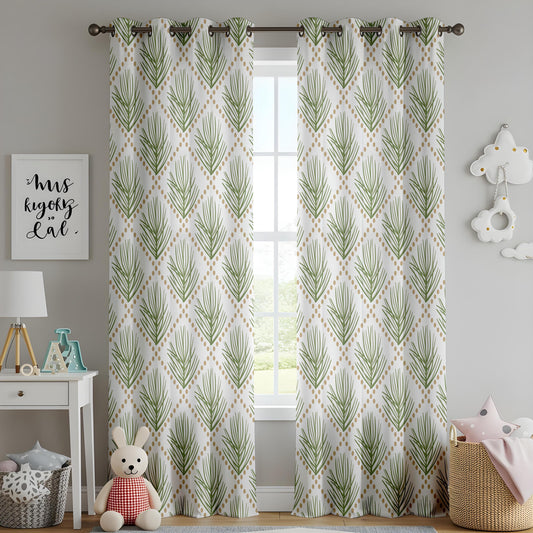
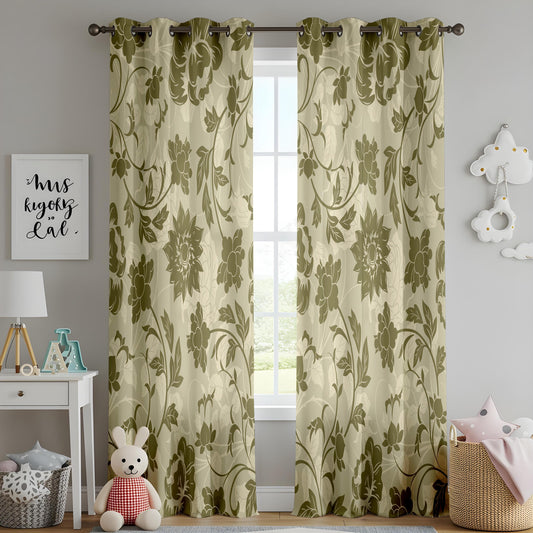
Botanical curtains bring the garden indoors without the upkeep. Leaves, ferns, trailing stems, palm fronds and pressed flower studies have been used in interiors for centuries because green growing things make a room feel calmer and more alive. Our botanical collection covers the full range, from delicate line drawn stems on a pale ground to dense, tropical foliage that turns a window into a wall of leaves. Every design is printed to your exact measurements and available unlined, with blackout lining or with thermal blackout lining.
Why Botanical Prints Never Really Go Out of Style
Botanical pattern is one of the oldest decorative traditions there is, and it survives because it does something practical: it softens hard architecture. Modern homes are full of straight lines, flat plaster and rectangular openings. A leaf print at the window introduces curve and irregularity, which is why a botanical curtain can make a plain new build room feel established in a way that a plain fabric cannot.
-
Softens a hard edged room. Organic shapes break up the straight lines of modern joinery, skirting and window frames.
-
Works with real plants. Botanical curtains and houseplants reinforce each other. The print picks up where the planting stops, especially in a room where light limits what you can actually grow.
-
Green is the easiest colour to live with. It sits between warm and cool, so it rarely clashes with existing flooring or furniture, and it reads as restful rather than demanding.
Choosing the Right Density of Foliage
Botanicals vary enormously in how much of the fabric they cover, and that matters more than the specific plant. A sparse stem print on a light ground behaves almost like a plain curtain with detail. A dense jungle print behaves like wallpaper. Decide how much visual weight the window should carry before you fall in love with a particular leaf.
-
Living rooms. Dense foliage on a wide window creates an enveloping, garden room feeling. Balance it with plain upholstery and natural materials such as wood, rattan and linen.
-
Bedrooms. Sparse stems and pale grounds keep the room restful. Add blackout lining so the print stays fresh in daylight and the room darkens fully at night.
-
Kitchens and garden rooms. Unlined botanical panels let daylight through the leaves, which gives the print a backlit, stained glass quality on a bright morning.
-
Bathrooms and cloakrooms. Small windows suit large leaf prints surprisingly well, because a single bold frond fills the panel and turns a functional window into a feature.
Choosing the Right Lining
Every design in this collection is available with three lining options, so you can match the look to how the room is actually used.
-
Standard (Unlined): A single layer that lets daylight filter softly through the print. The colours stay luminous and the fabric hangs lightly, which makes it the natural choice for kitchens, dining rooms, hallways and any room where you want brightness rather than darkness.
-
Blackout Lining: An opaque backing layer bonded behind the printed face. It blocks external light almost entirely, so it is the option for bedrooms, nurseries, shift workers and home cinemas. It also adds body, giving the curtain a fuller, heavier fall.
-
Thermal Blackout Lining: Everything the blackout lining does, plus an insulating layer that slows heat loss through the glass in winter and reduces solar gain in summer. If you are trying to bring heating bills down or you have a draughty bay window, this is the one to choose.
Each design is also available as a single panel or a pair, in ten standard drops, so you can dress a narrow landing window and a wide living room bay from the same collection.
Made to Measure, Made to Order
Nothing in this collection sits in a warehouse waiting to be picked. Your fabric is printed and your curtains are sewn after you order, which is why the size and lining you choose are made exactly as specified rather than approximated from stock. Production takes 8-10 days, and delivery is free worldwide.
If you are torn between two designs, order fabric samples first. Screens shift colour, and a print that reads as soft sage on a phone can look considerably deeper against your own wall in your own light. A sample costs a fraction of a full order and removes the guesswork entirely.
Frequently Asked Questions About Botanical Curtains
1. Are botanical curtains only suitable for country style homes?
Not at all. The style of the drawing matters far more than the subject. A loose watercolour fern reads as country, while a flat, graphic palm in two colours reads as thoroughly modern. Botanical prints appear in minimalist, mid century and contemporary interiors just as often as in traditional ones. Choose the treatment that matches your room and the plant itself will not date the scheme.
2. What colours work best alongside a green botanical print?
Warm neutrals are the safest and most flattering: chalk white, oatmeal, clay, natural wood. If you want more energy, terracotta and rust sit opposite green on the colour wheel and make the foliage look richer. Avoid matching your walls exactly to the green in the print, because the curtain then loses its contrast and the pattern flattens.
3. Will a large leaf print overwhelm a small room?
Usually the opposite happens. A small room with a timid pattern often feels apologetic, while one confident large scale print gives it character and a sense of purpose. The rule that matters is restraint elsewhere: if the curtains carry a big botanical, keep the walls, bedding and upholstery plain and let the window be the event.
4. Does daylight fade botanical prints over time?
All printed textiles fade eventually under direct, prolonged sunlight, and greens are no more vulnerable than other colours. Adding a blackout or thermal blackout lining helps considerably, because the lining takes the direct exposure and shields the printed face. On a south facing window this is worth choosing for longevity alone, quite apart from the light control.
5. Can I use botanical curtains in a room that gets very little natural light?
Yes, but choose carefully. In a dark room, a dense dark green print can close the space down further. Look instead for botanicals on a light ground, where the negative space between the leaves reflects what daylight there is. Unlined panels also help here, since they let light filter through rather than blocking it when the curtains are drawn back.
6. How do I measure my windows for made-to-measure curtains?
Use a metal tape measure, not fabric. Width: measure your pole or track, not the window, and let the pole extend 15cm to 30cm beyond the glass on each side so the curtains can stack back without blocking light. Drop: measure from the pole or track down to where you want the curtains to finish: 1cm above the sill, 15cm below the sill, or 1cm to 2cm off the floor for full length.
7. What is the difference between blackout and thermal blackout lining?
A blackout lining is about light: an opaque layer that stops daylight and streetlight coming through. A thermal blackout lining does the same job and adds an insulating layer that slows heat moving through the window, keeping rooms warmer in winter and cooler in summer. If your priority is sleep, blackout is enough. If it is comfort and energy bills, choose thermal blackout.
8. How should I clean my printed curtains?
Professional dry cleaning only. The printed face and the bonded blackout and thermal linings do not respond well to machine washing, which can shrink the fabric and separate the lining. Between cleans, a vacuum with the soft brush attachment on a low setting keeps dust from settling into the weave.
9. How long will my order take, and what does delivery cost?
Every order is printed and sewn from scratch, so allow 8-10 days for production. Delivery on curtains is free worldwide. Orders to the United States are sent DDP, meaning import taxes and duties are already covered and there is nothing to pay when the parcel arrives.
Explore more: Abstract Curtains, Geometric Curtains, Retro Curtains, Green Curtains and Blue Curtains. Or narrow the choice by lining with Blackout Curtains and Thermal Curtains, or browse every design in Curtains.