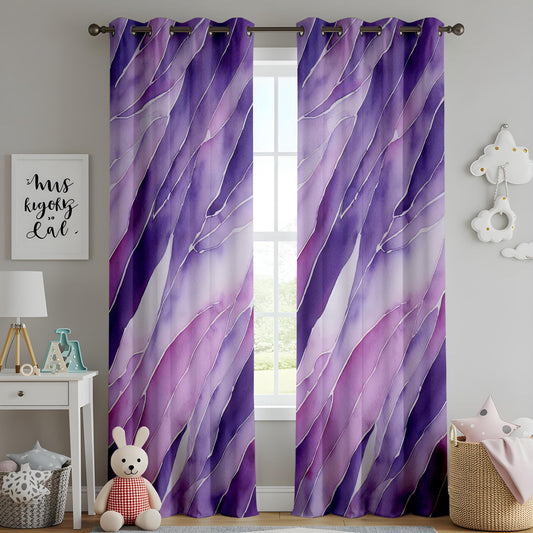
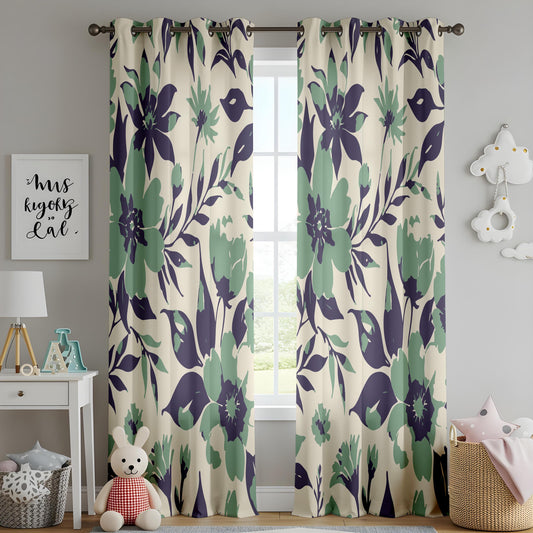
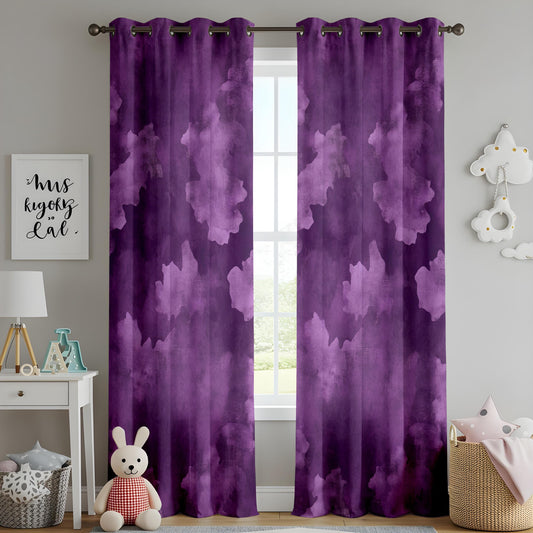
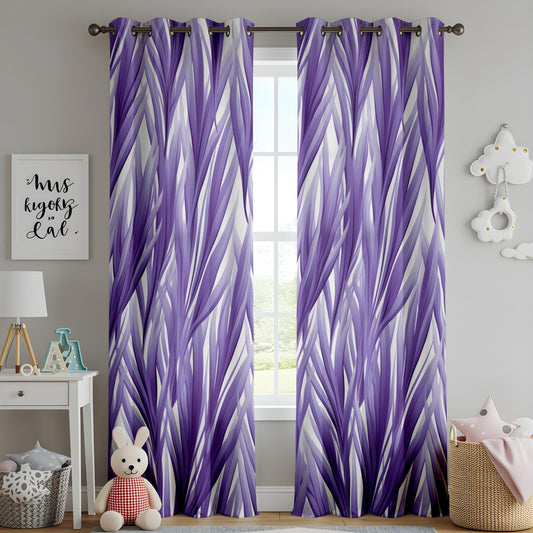
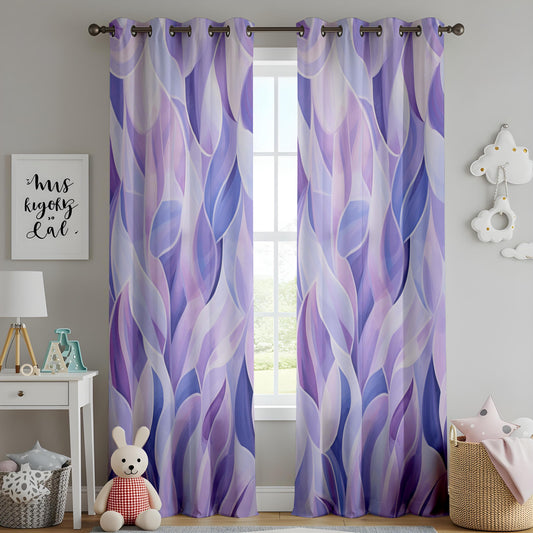
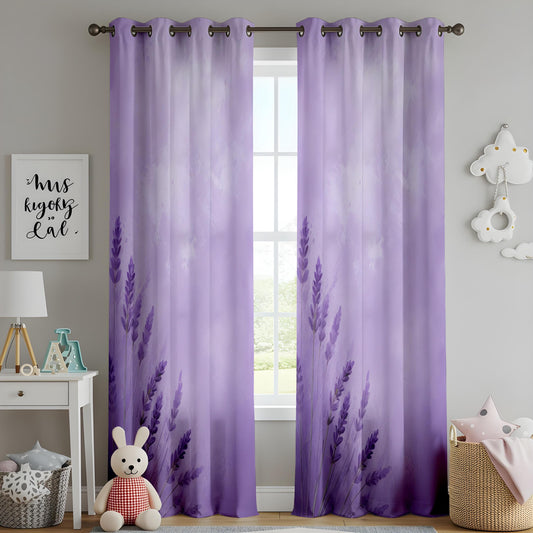
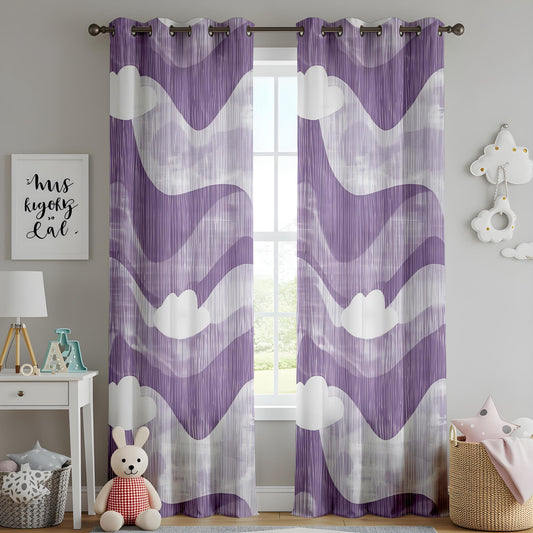
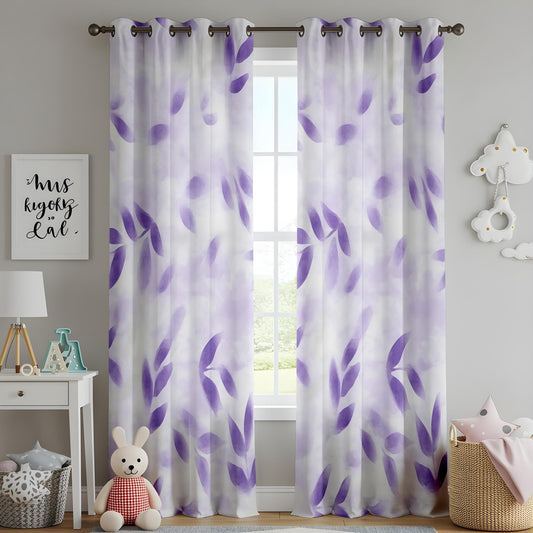
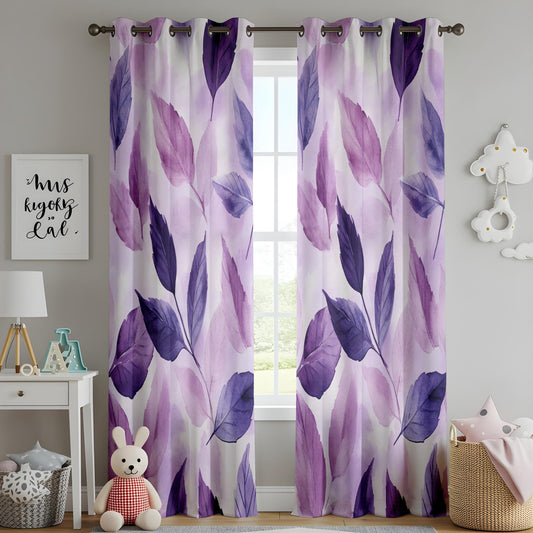
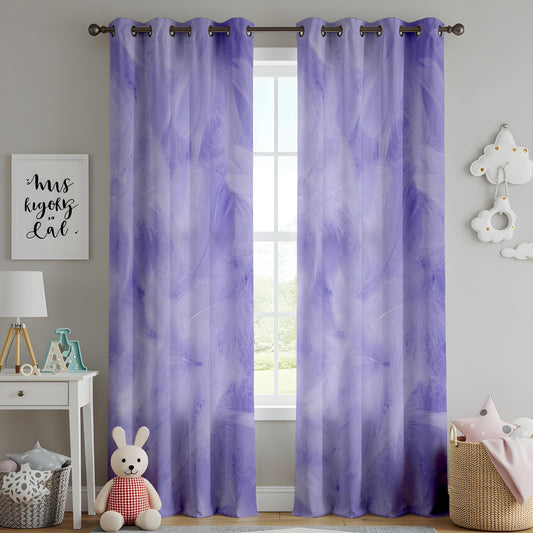
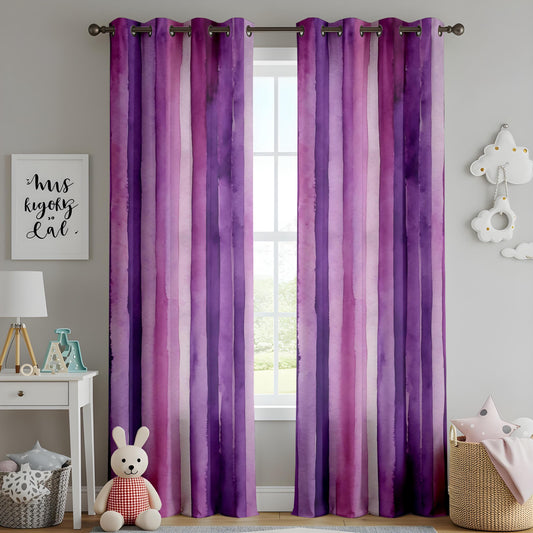
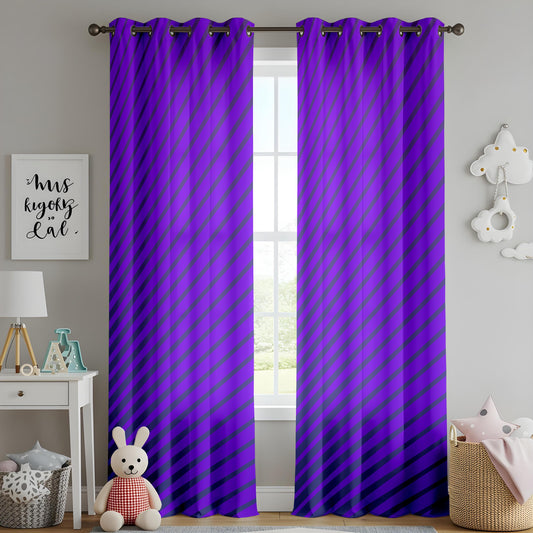
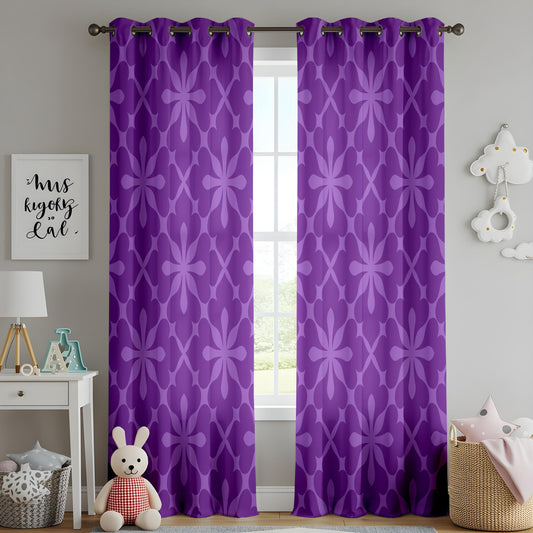
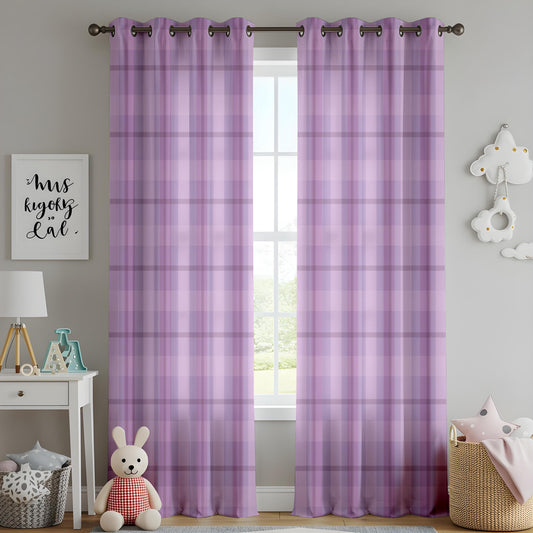
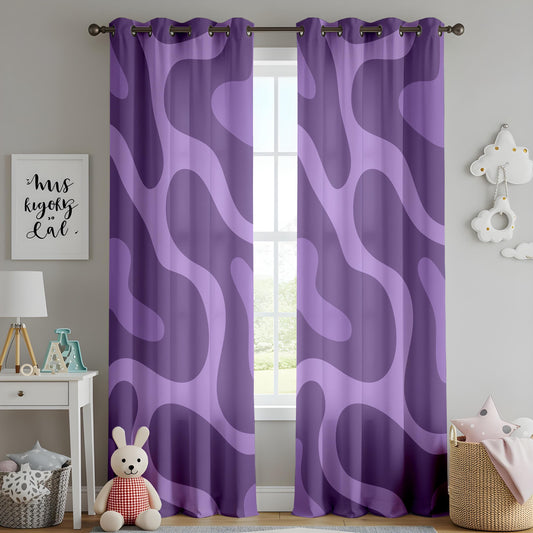
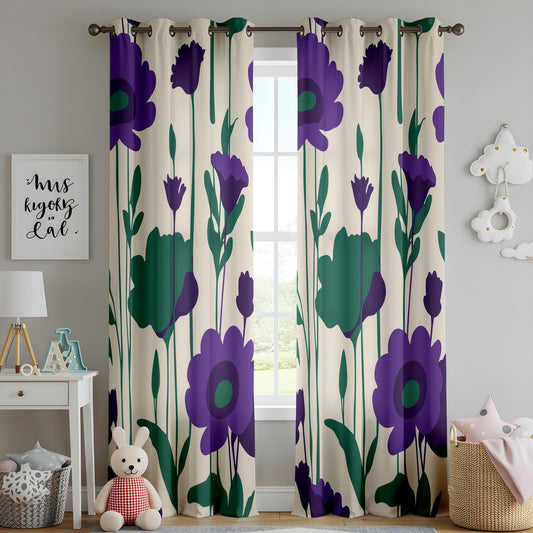
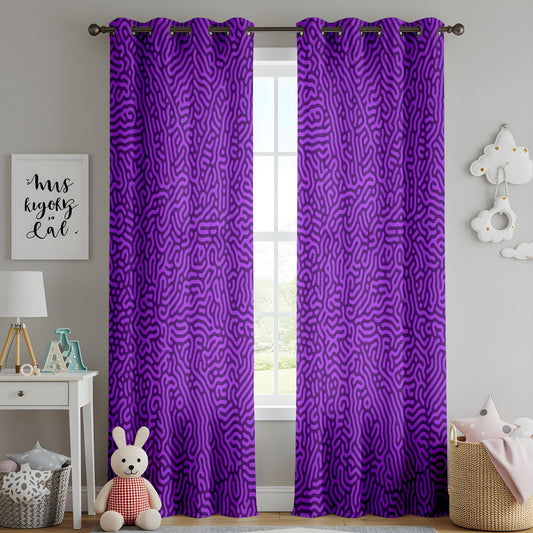
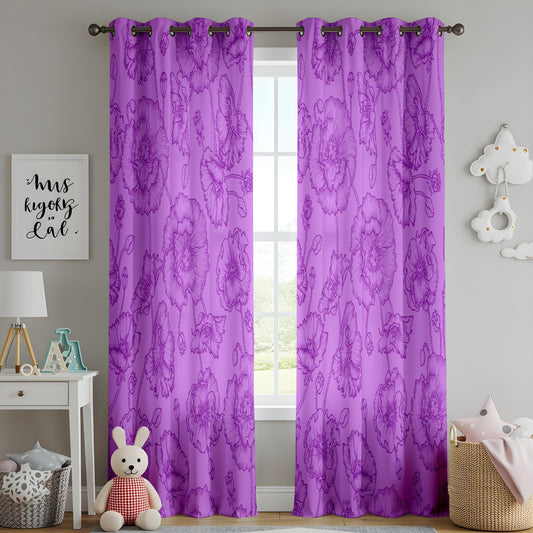
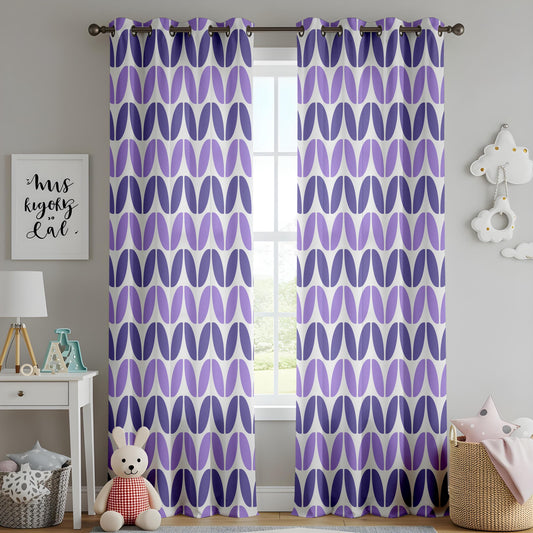
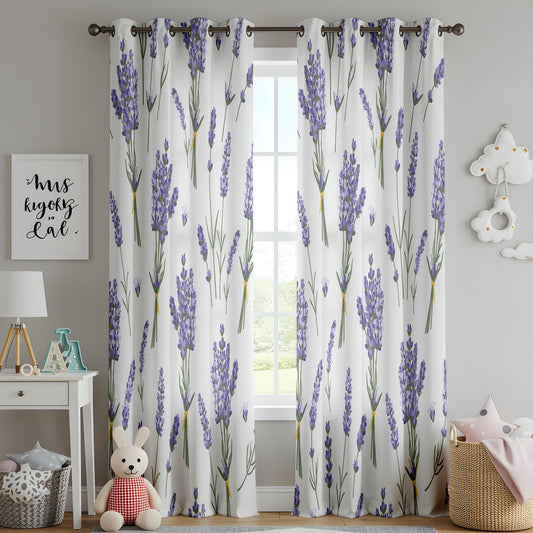
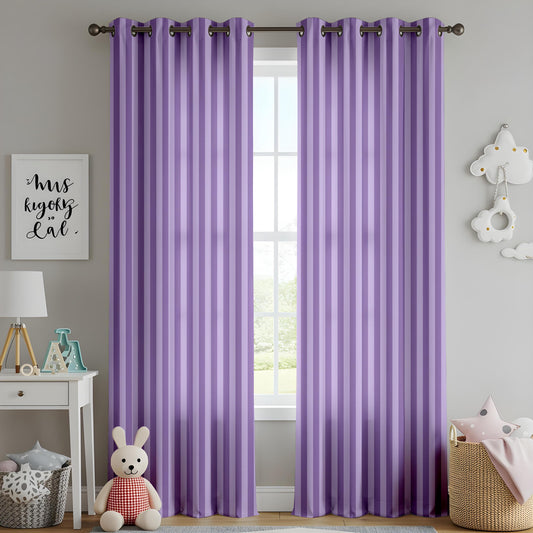
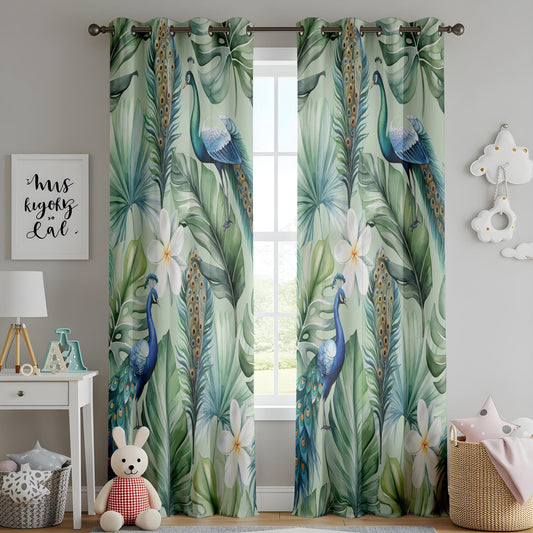
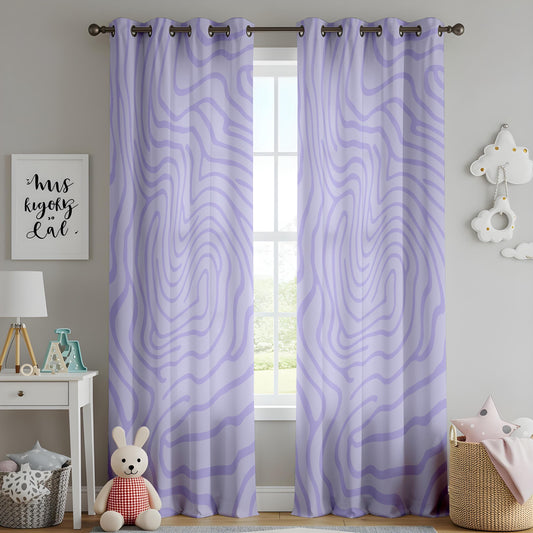
Purple is the colour of dye that was once too expensive for ordinary use, and it has never entirely lost that association. At the window it delivers depth and a certain richness that blue and red cannot manage on their own. This collection runs from soft lilac and lavender through dusty mauve and heather to deep plum and aubergine, in florals, geometrics and abstract prints. Every design is made to your window measurements and available unlined, with blackout lining or with thermal blackout lining.
The Two Halves of Purple
Pale purples and deep purples behave like different colours entirely. Lilac and lavender are soft, cool and restful, and they function almost as neutrals in a bedroom. Plum and aubergine are dense, warm and enveloping, closer in effect to a deep red than to lilac. Knowing which half you want narrows the choice far faster than browsing by pattern.
-
Lilac and lavender for calm. Cool, soft and restful, which is why they have been bedroom colours for generations.
-
Plum and aubergine for depth. Rich and enclosing, and particularly good in evening rooms where lamplight brings out the warmth in them.
-
Sits between warm and cool. Purple contains both red and blue, so it bridges schemes that would otherwise clash, which is genuinely useful in a room with mixed existing colours.
Getting Purple Right
Purple is sensitive to what it sits beside. Against grey it looks sophisticated. Against beige it can look muddy, because the yellow in the beige fights the blue in the purple. Against green it becomes striking, since the two sit near opposite each other on the colour wheel. Decide the partner colour before the shade of purple, not after.
-
Bedrooms. Lavender and heather with blackout lining make a genuinely restful room, soft in daylight and completely dark at night.
-
Living rooms. Deep plum panels give a neutral room a centre of gravity. Pair with grey, charcoal or warm timber rather than with beige.
-
Dining rooms. Aubergine under lamplight is one of the richest effects available at a window, and it suits a room used mainly after dark.
-
Studies and snugs. Mid tone purples with green accents make a small enclosed room feel considered rather than gloomy.
Choosing the Right Lining
Every design in this collection is available with three lining options, so you can match the look to how the room is actually used.
-
Standard (Unlined): A single layer that lets daylight filter softly through the print. The colours stay luminous and the fabric hangs lightly, which makes it the natural choice for kitchens, dining rooms, hallways and any room where you want brightness rather than darkness.
-
Blackout Lining: An opaque backing layer bonded behind the printed face. It blocks external light almost entirely, so it is the option for bedrooms, nurseries, shift workers and home cinemas. It also adds body, giving the curtain a fuller, heavier fall.
-
Thermal Blackout Lining: Everything the blackout lining does, plus an insulating layer that slows heat loss through the glass in winter and reduces solar gain in summer. If you are trying to bring heating bills down or you have a draughty bay window, this is the one to choose.
Each design is also available as a single panel or a pair, in ten standard drops, so you can dress a narrow landing window and a wide living room bay from the same collection.
Made to Measure, Made to Order
Nothing in this collection sits in a warehouse waiting to be picked. Your fabric is printed and your curtains are sewn after you order, which is why the size and lining you choose are made exactly as specified rather than approximated from stock. Production takes 8-10 days, and delivery is free worldwide.
If you are torn between two designs, order fabric samples first. Screens shift colour, and a print that reads as soft sage on a phone can look considerably deeper against your own wall in your own light. A sample costs a fraction of a full order and removes the guesswork entirely.
Frequently Asked Questions About Purple Curtains
1. Is purple a difficult colour to decorate with?
It has a reputation for it, mostly because it is often paired badly. Purple against beige or cream frequently looks muddy, since the warm yellow undertone works against the blue in the purple. Against grey, charcoal, white or green it looks expensive. Choosing the right partner colour matters more with purple than with almost any other hue.
2. What is the difference between lilac, mauve and plum?
Depth and warmth. Lilac is pale and cool, closest to a tinted white and almost neutral in effect. Mauve is a mid tone with grey in it, more muted and easier to live with over long periods. Plum is dark and warm, with enough red in it to behave like a deep berry rather than a purple. They suit entirely different rooms.
3. Does purple work in a north facing room?
The warm purples do. Plum, aubergine and heather contain enough red to push back against cool northern light. Lilac and lavender are risky in the same room, because cool light emphasises their blue content and they can drift towards grey, losing the softness that made them attractive on the sample.
4. Are purple curtains suitable for a child's room?
They are a common request and they work well, though it is worth choosing a shade with some longevity. Bright violet is strongly associated with a particular age, while heather, dusty lilac and mauve carry through into the teenage years without needing to be replaced. Blackout lining matters here as much as it does in any other child's bedroom.
5. What accent colours work with purple?
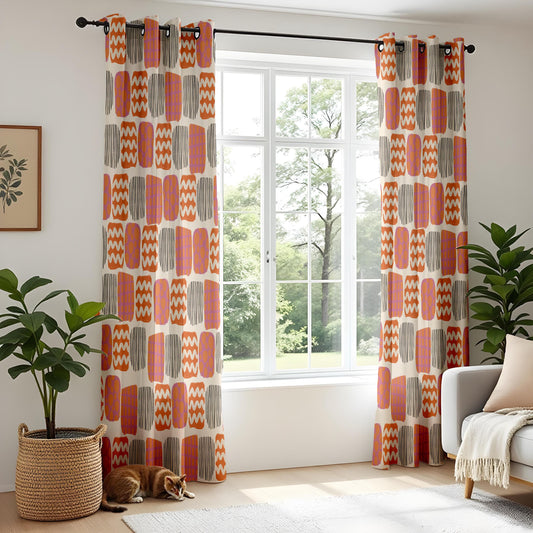
Green is the strongest contrast and the most striking, particularly a soft sage or olive against plum. Gold and brass flatter the deeper purples and bring out their richness. Grey is the safe supporting neutral. The pairing to be careful with is orange, which sits opposite purple but at a similar intensity, so the two tend to shout at each other rather than balance.
6. How do I measure my windows for made-to-measure curtains?
Use a metal tape measure, not fabric. Width: measure your pole or track, not the window, and let the pole extend 15cm to 30cm beyond the glass on each side so the curtains can stack back without blocking light. Drop: measure from the pole or track down to where you want the curtains to finish: 1cm above the sill, 15cm below the sill, or 1cm to 2cm off the floor for full length.
7. What is the difference between blackout and thermal blackout lining?
A blackout lining is about light: an opaque layer that stops daylight and streetlight coming through. A thermal blackout lining does the same job and adds an insulating layer that slows heat moving through the window, keeping rooms warmer in winter and cooler in summer. If your priority is sleep, blackout is enough. If it is comfort and energy bills, choose thermal blackout.
8. How should I clean my printed curtains?
Professional dry cleaning only. The printed face and the bonded blackout and thermal linings do not respond well to machine washing, which can shrink the fabric and separate the lining. Between cleans, a vacuum with the soft brush attachment on a low setting keeps dust from settling into the weave.
9. How long will my order take, and what does delivery cost?
Every order is printed and sewn from scratch, so allow 8-10 days for production. Delivery on curtains is free worldwide. Orders to the United States are sent DDP, meaning import taxes and duties are already covered and there is nothing to pay when the parcel arrives.
Explore more: Multicolour Curtains, Green Curtains, Blue Curtains, Floral Curtains and Botanical Curtains. Or narrow the choice by lining with Blackout Curtains and Thermal Curtains, or browse every design in Curtains.