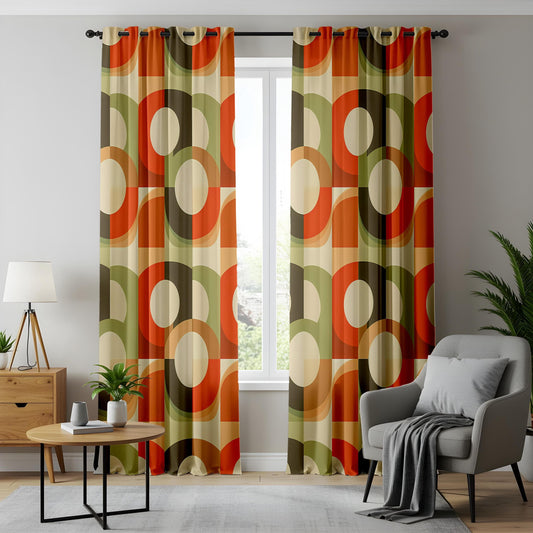
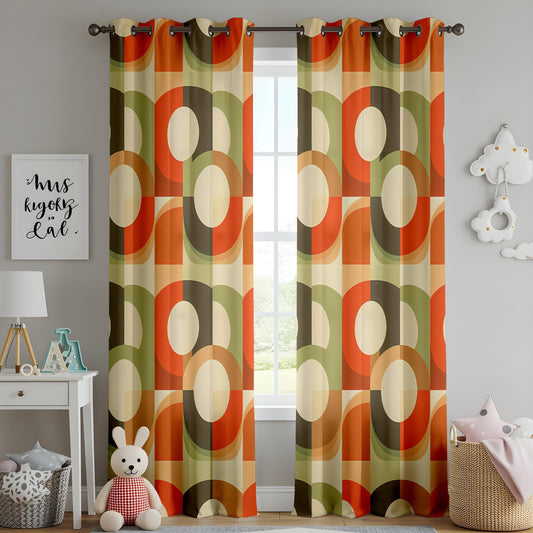
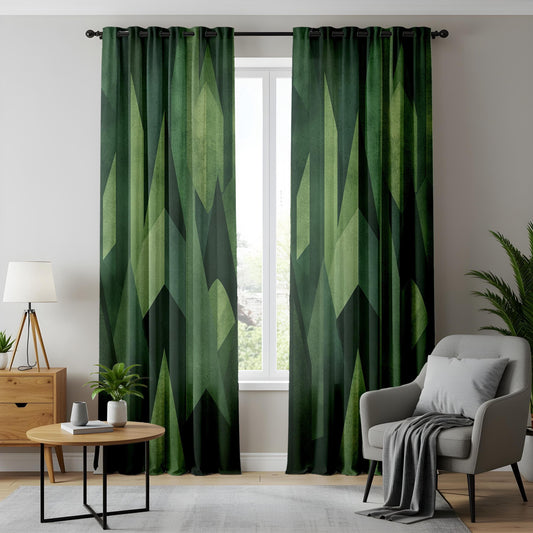
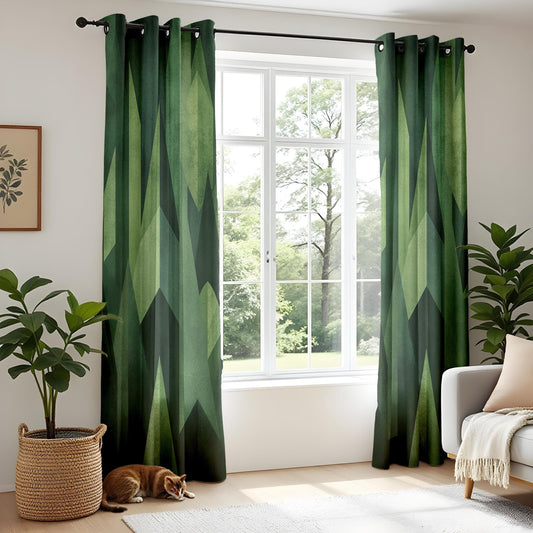
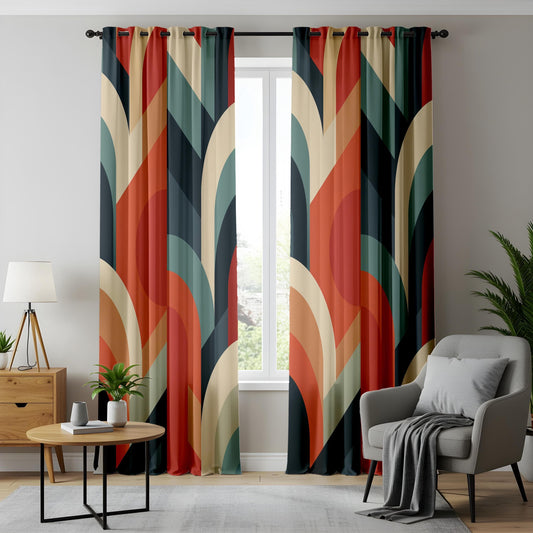
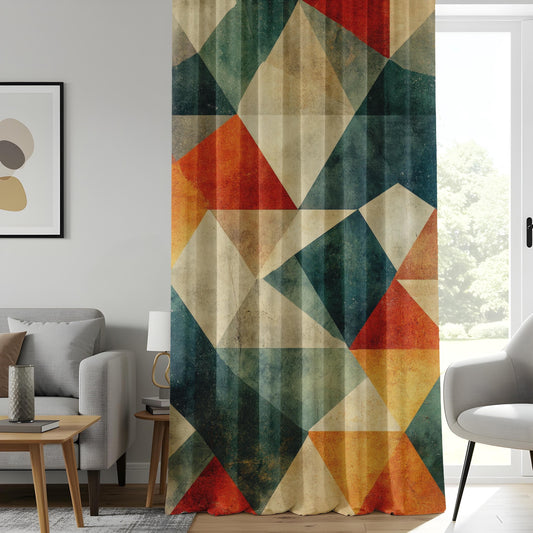
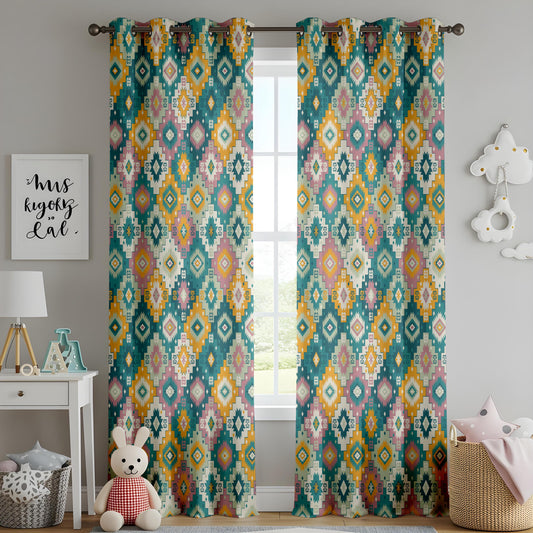
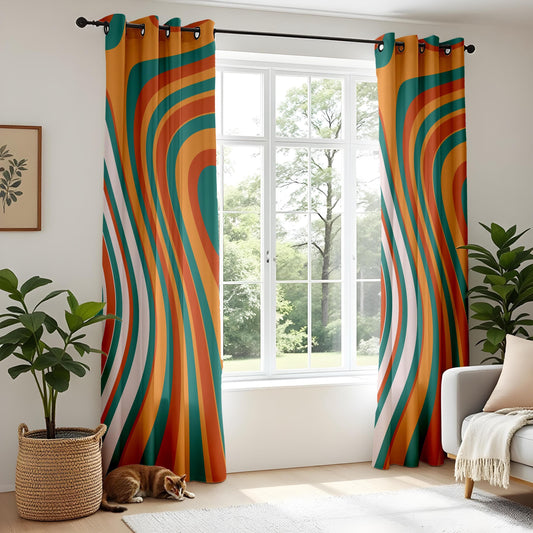
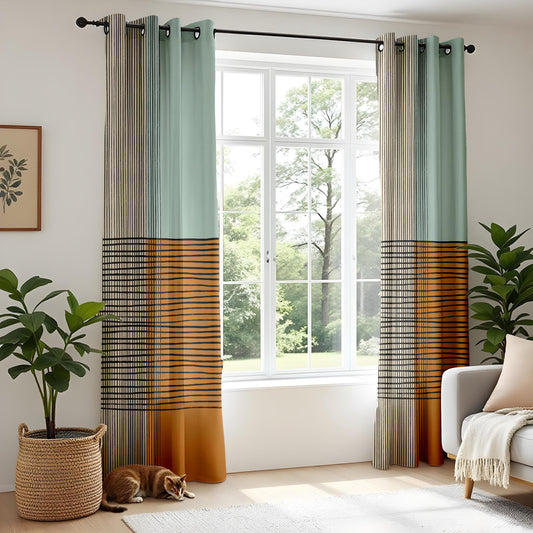
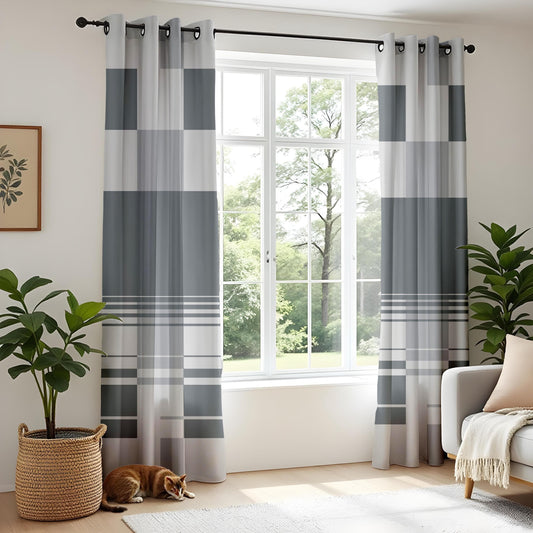
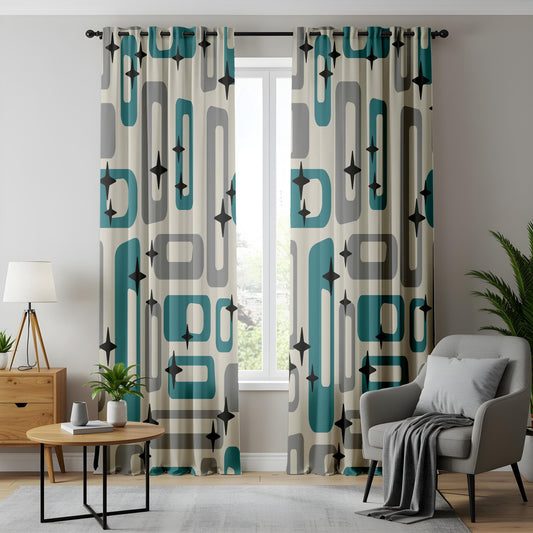
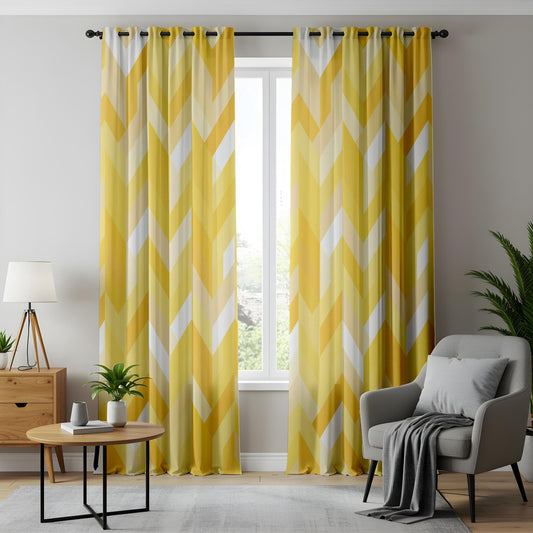
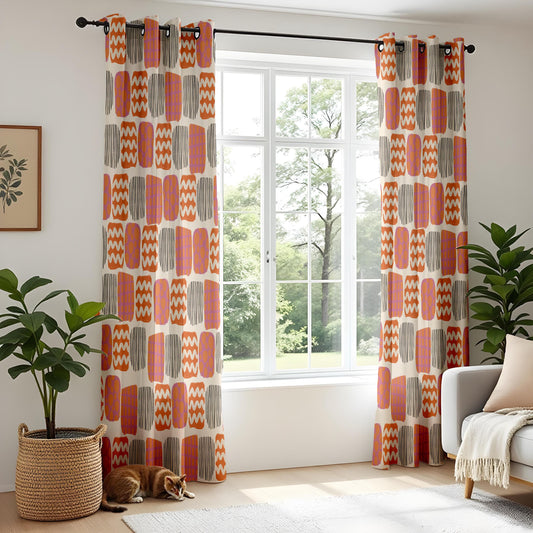
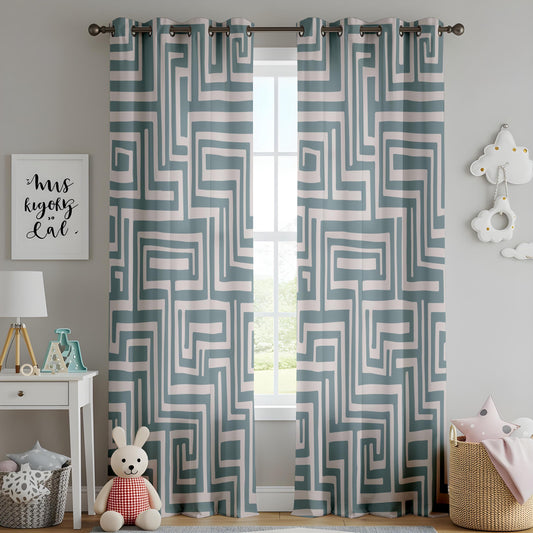
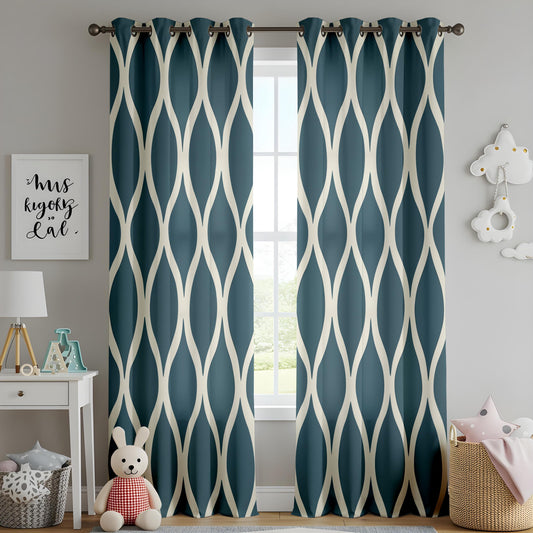
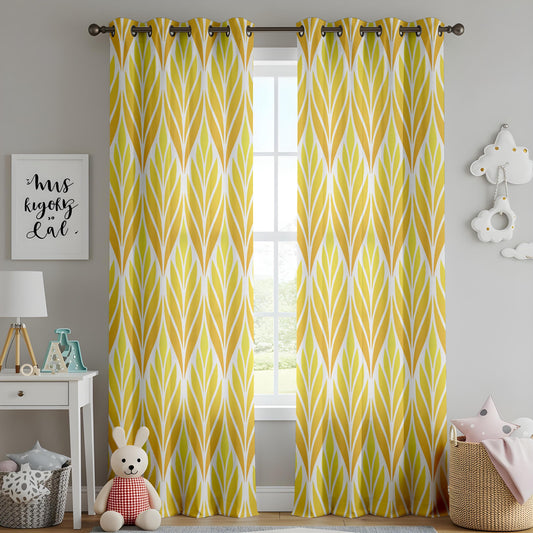
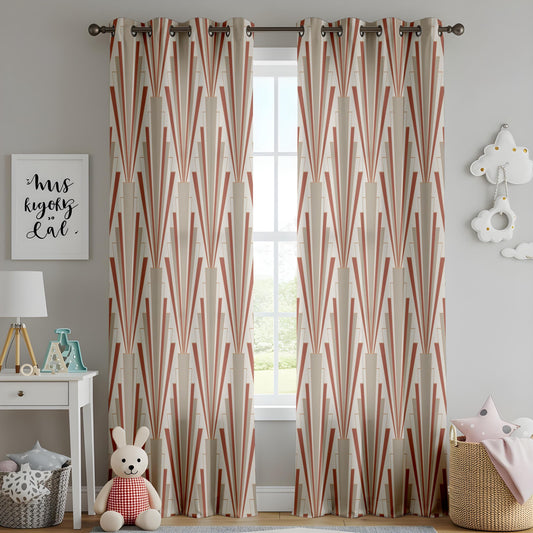
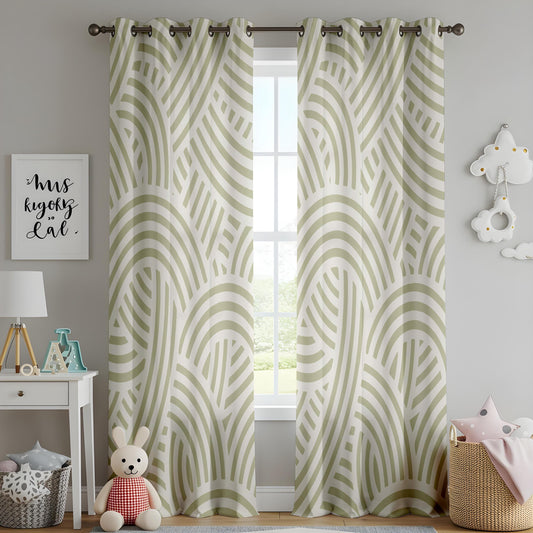
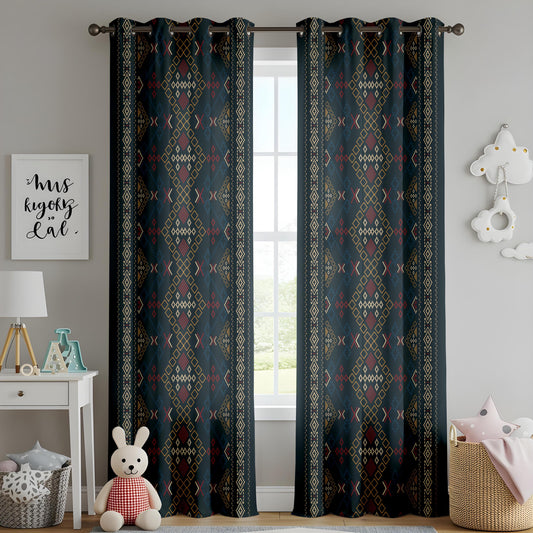
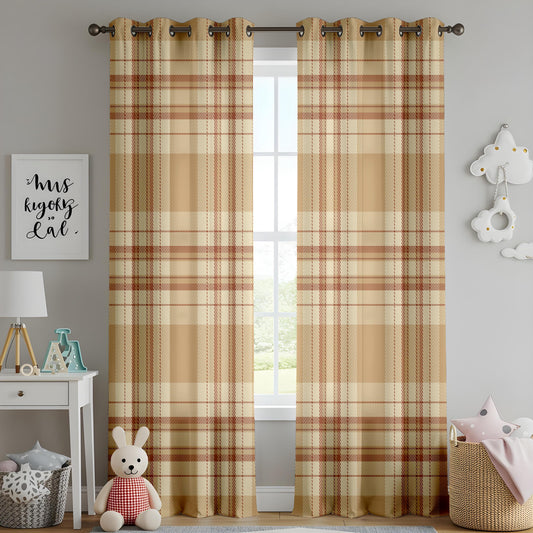
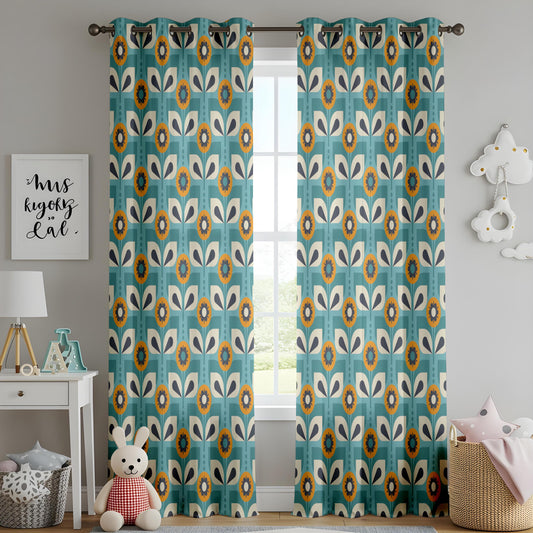
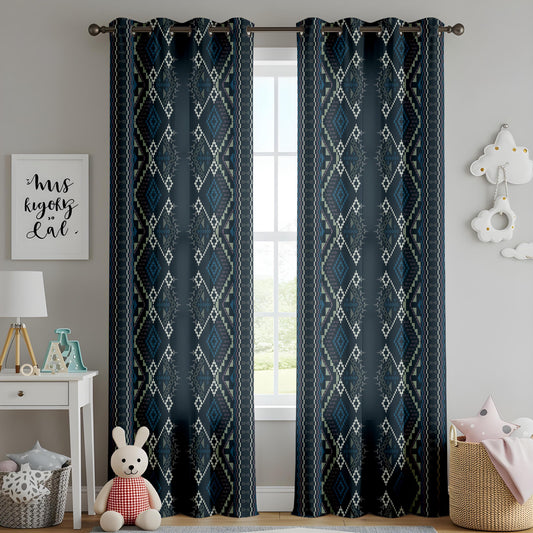
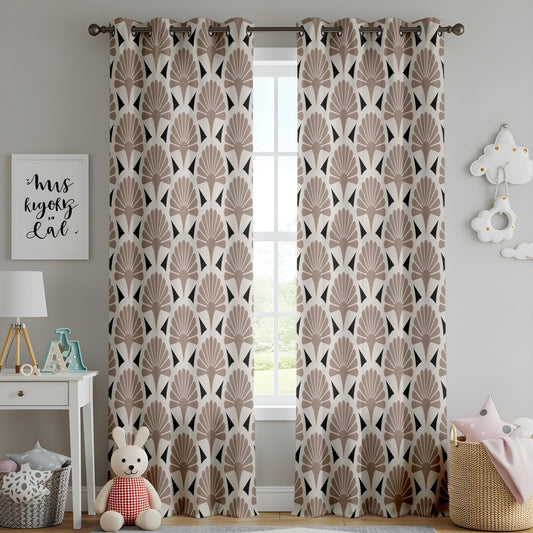
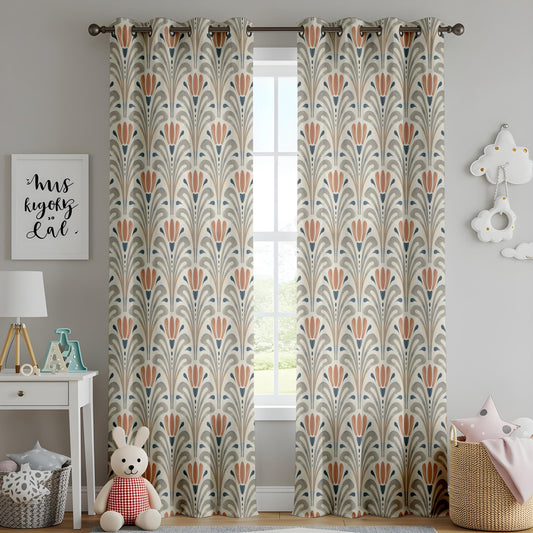
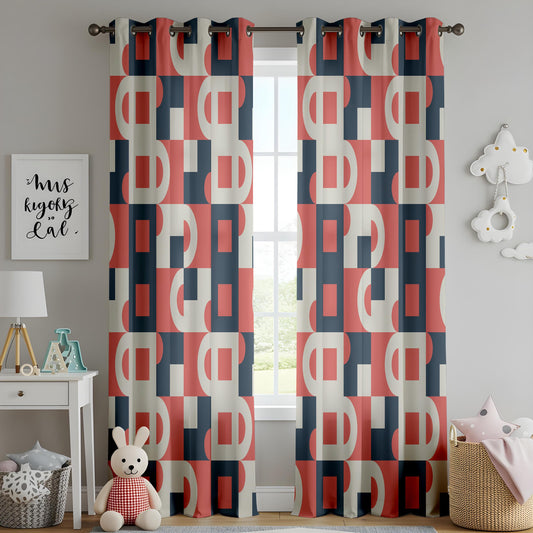
Geometric curtains bring order to a window. Repeating shapes, whether that is a fine grid, a bold chevron, interlocking hexagons or a loose hand drawn diamond, give a room structure in a way that floral and painterly prints never quite manage. They are the print family to reach for when a space feels shapeless: a wide open living room, a long hallway, a bedroom where the furniture is low and everything reads horizontal. Our geometric collection spans crisp modern repeats and softer, imperfect line work, all printed to your window measurements and finished with unlined, blackout or thermal blackout lining.
Why Geometry Works So Well at the Window
Curtains hang in folds, and folds do something interesting to a repeating pattern. A geometric print compresses and expands as the fabric gathers, so the design stays alive rather than static. That is why a repeat that looks almost severe on a flat sample can feel warm and rhythmic once it is hanging. It also means scale matters more here than in any other print family: the same design behaves very differently on a narrow window and a wide bay.
-
Structure where a room lacks it. A vertical or diagonal repeat draws the eye upward, which makes a low ceiling feel taller and a squat window feel more generous.
-
Easy to combine. Geometry sits comfortably alongside florals, stripes and plain textiles, because it reads as architecture rather than as a competing subject.
-
Scales to the room. Large repeats suit big windows and open plan spaces. Small, dense repeats work better in compact rooms, where they behave almost like a woven texture.
Getting the Scale and Placement Right
The most common mistake with geometric curtains is choosing a repeat that is too small for the window. On a wide bay, a fine grid disappears into visual noise from across the room. On a narrow landing window, a huge repeat gets cut off and you never see the full shape. Match the repeat to the width you are dressing and the print will do the work for you.
-
Living rooms. Go large. A bold repeat across a wide window reads as a deliberate design decision. Keep the sofa and rug plainer so the geometry stays the focal point.
-
Bedrooms. Softer, hand drawn geometry is more restful than hard edged repeats. Combine with blackout lining so the pattern stays graphic during the day and the room still goes dark at night.
-
Kitchens and dining rooms. Small scale repeats and unlined panels keep these rooms bright while adding pattern that copes well with busy surfaces and open shelving.
-
Hallways and landings. A vertical repeat lengthens a narrow space. Because these windows are often small, choose a design where one full repeat fits comfortably within the panel width.
Choosing the Right Lining
Every design in this collection is available with three lining options, so you can match the look to how the room is actually used.
-
Standard (Unlined): A single layer that lets daylight filter softly through the print. The colours stay luminous and the fabric hangs lightly, which makes it the natural choice for kitchens, dining rooms, hallways and any room where you want brightness rather than darkness.
-
Blackout Lining: An opaque backing layer bonded behind the printed face. It blocks external light almost entirely, so it is the option for bedrooms, nurseries, shift workers and home cinemas. It also adds body, giving the curtain a fuller, heavier fall.
-
Thermal Blackout Lining: Everything the blackout lining does, plus an insulating layer that slows heat loss through the glass in winter and reduces solar gain in summer. If you are trying to bring heating bills down or you have a draughty bay window, this is the one to choose.
Each design is also available as a single panel or a pair, in ten standard drops, so you can dress a narrow landing window and a wide living room bay from the same collection.
Made to Measure, Made to Order
Nothing in this collection sits in a warehouse waiting to be picked. Your fabric is printed and your curtains are sewn after you order, which is why the size and lining you choose are made exactly as specified rather than approximated from stock. Production takes 8-10 days, and delivery is free worldwide.
If you are torn between two designs, order fabric samples first. Screens shift colour, and a print that reads as soft sage on a phone can look considerably deeper against your own wall in your own light. A sample costs a fraction of a full order and removes the guesswork entirely.
Frequently Asked Questions About Geometric Curtains
1. How do I know if a geometric repeat is too big for my window?
As a rough guide, you want at least two full repeats visible across the flat width of one panel. If a single repeat is wider than the panel, the design will read as random fragments rather than a pattern. Our product pages show the design across a full panel, and a fabric sample lets you check the repeat size against your own window before you commit.
2. Will geometric curtains make a small room feel smaller?
Not if you choose the direction carefully. Vertical repeats stretch a room upward and are a genuine asset in a low ceilinged space. Horizontal repeats widen, which helps a narrow room but can make a small square room feel squatter. Diagonals and diamonds sit somewhere in between and are the safest choice when you are unsure.
3. Can I mix geometric curtains with a patterned rug or wallpaper?
Yes, provided the two patterns differ in scale. A large geometric curtain over a small, dense rug pattern works because the eye can separate them. Two medium patterns of similar scale compete and the room starts to feel restless. If your wallpaper is already geometric, choose a curtain in the same colour family but a noticeably different repeat size.
4. Do geometric prints suit period properties?
They can, and the result is often more interesting than a safe traditional print. Victorian and Edwardian rooms have strong vertical architecture already, so a geometric curtain echoes rather than fights it. Keep the palette muted and let the shape do the talking, and the contrast between old room and modern repeat reads as intentional.
5. Will the pattern line up across a pair of curtains?
We aim for balanced placement across the pair rather than a forced match. Because every order is cut to your specific drop and width, the position of the repeat depends on your measurements. What we avoid is an awkward cut through the middle of a motif at the leading edge, which is the placement people actually notice when the curtains are closed.
6. How do I measure my windows for made-to-measure curtains?
Use a metal tape measure, not fabric. Width: measure your pole or track, not the window, and let the pole extend 15cm to 30cm beyond the glass on each side so the curtains can stack back without blocking light. Drop: measure from the pole or track down to where you want the curtains to finish: 1cm above the sill, 15cm below the sill, or 1cm to 2cm off the floor for full length.
7. What is the difference between blackout and thermal blackout lining?
A blackout lining is about light: an opaque layer that stops daylight and streetlight coming through. A thermal blackout lining does the same job and adds an insulating layer that slows heat moving through the window, keeping rooms warmer in winter and cooler in summer. If your priority is sleep, blackout is enough. If it is comfort and energy bills, choose thermal blackout.
8. How should I clean my printed curtains?
Professional dry cleaning only. The printed face and the bonded blackout and thermal linings do not respond well to machine washing, which can shrink the fabric and separate the lining. Between cleans, a vacuum with the soft brush attachment on a low setting keeps dust from settling into the weave.
9. How long will my order take, and what does delivery cost?
Every order is printed and sewn from scratch, so allow 8-10 days for production. Delivery on curtains is free worldwide. Orders to the United States are sent DDP, meaning import taxes and duties are already covered and there is nothing to pay when the parcel arrives.
Explore more: Retro Curtains, Boho Curtains, Minimalist Curtains, Green Curtains and Blue Curtains. Or narrow the choice by lining with Blackout Curtains and Thermal Curtains, or browse every design in Curtains.