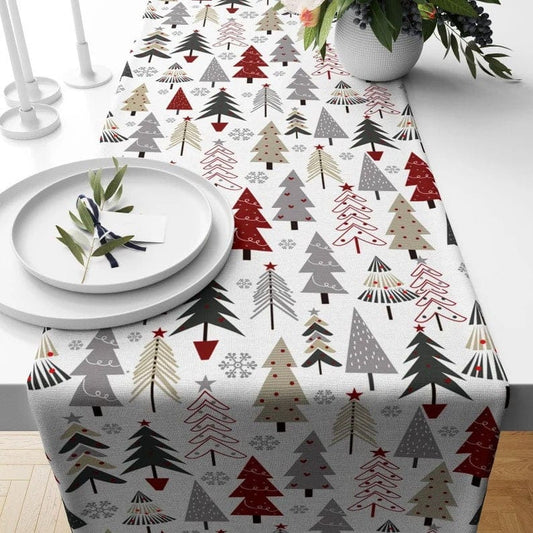
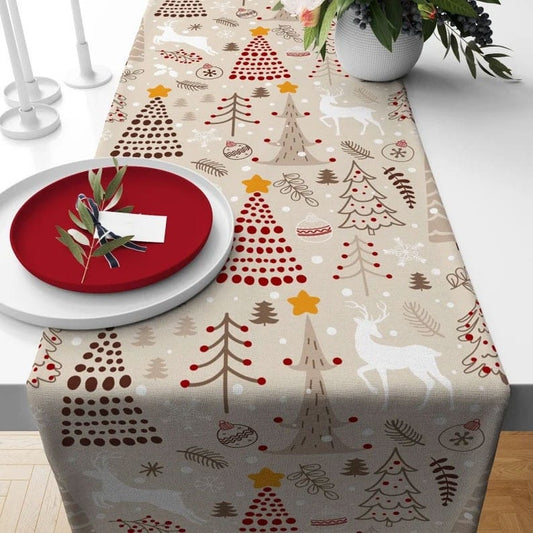
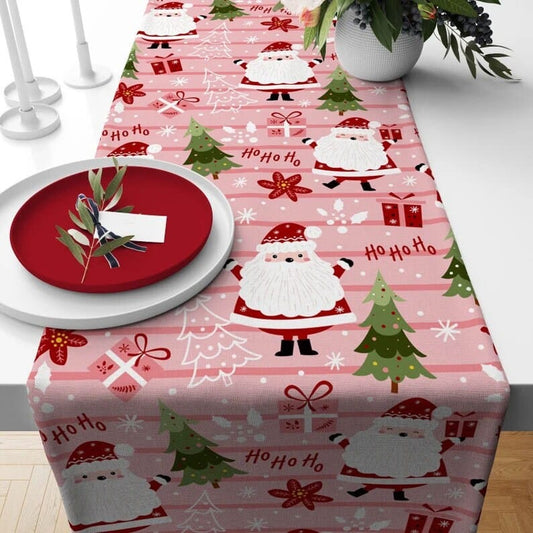
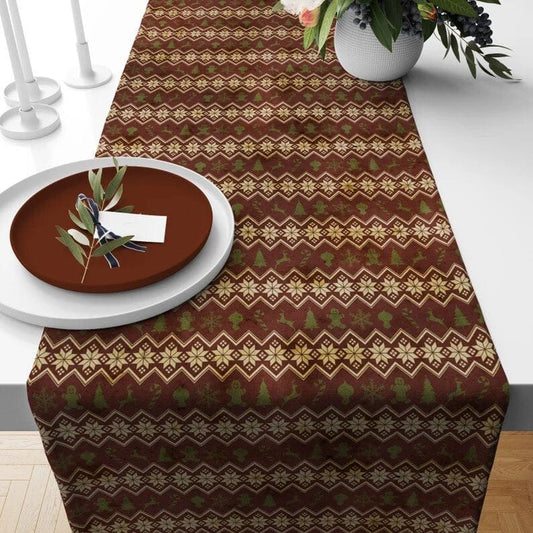
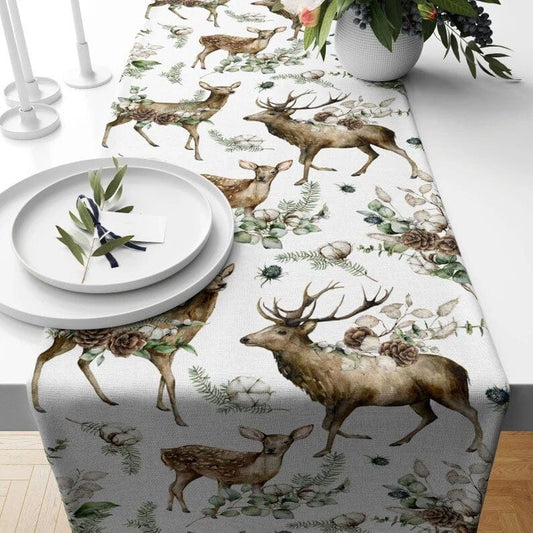
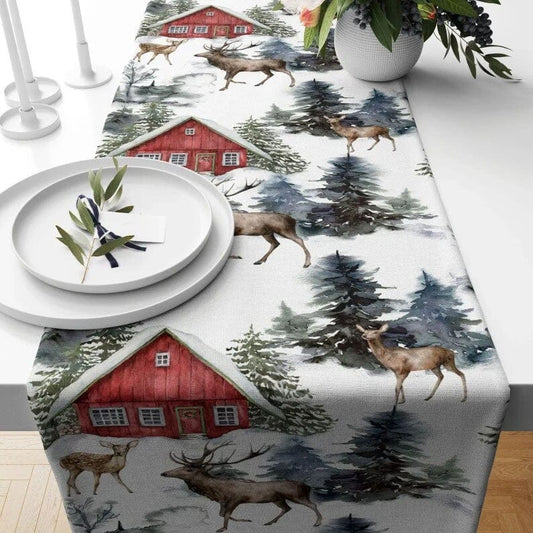
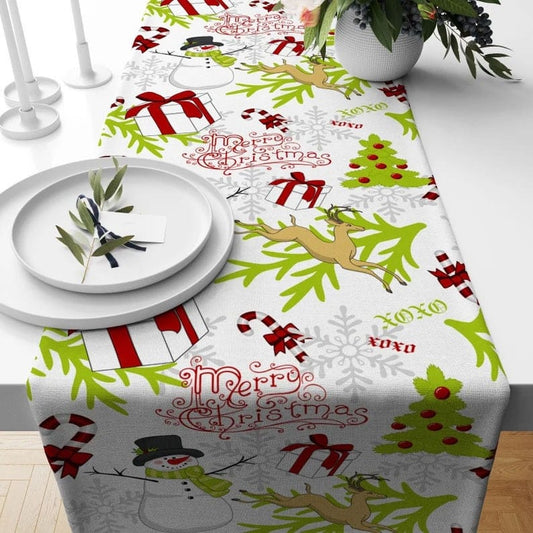
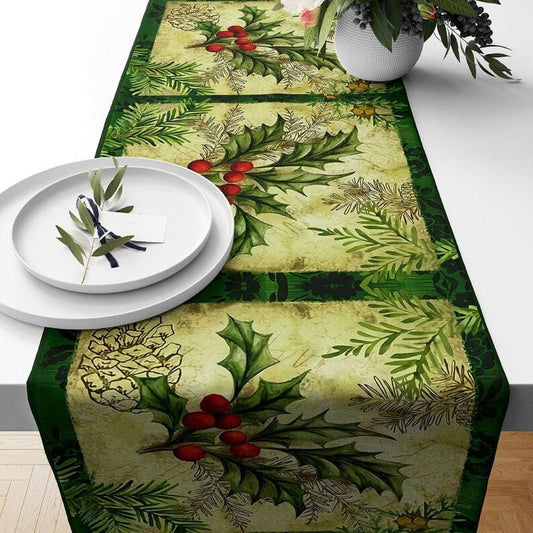
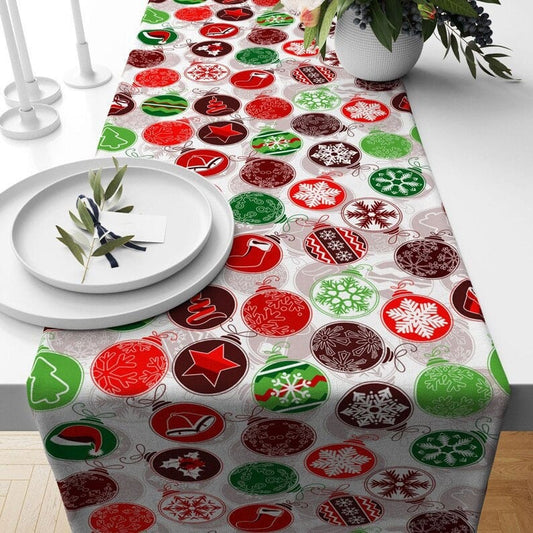
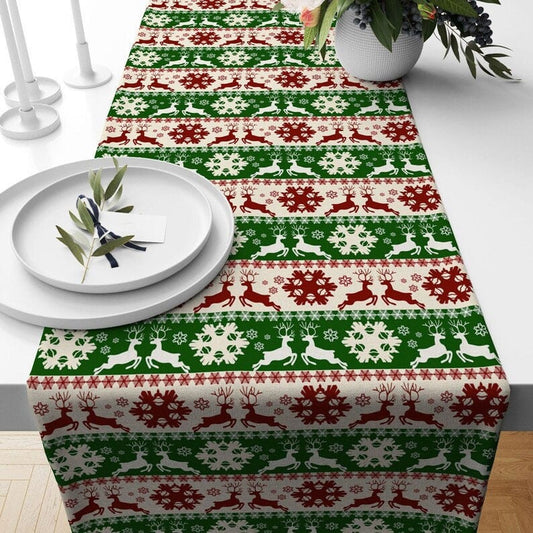
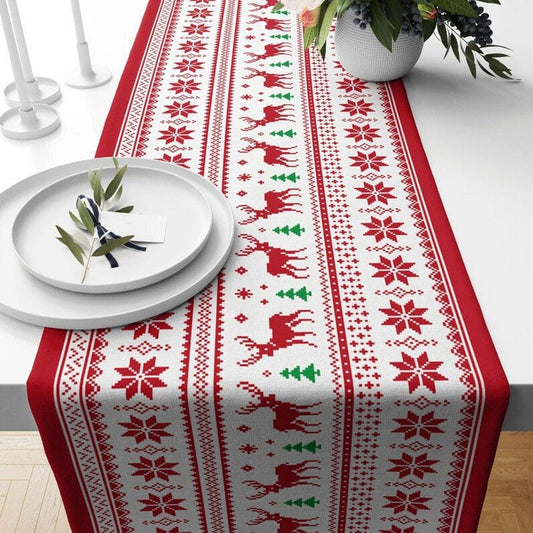
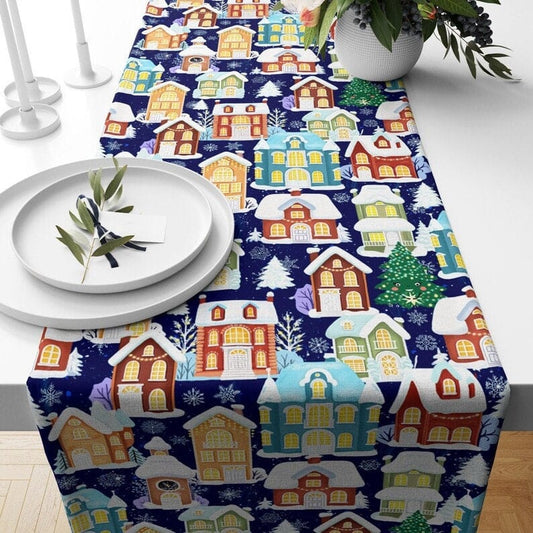
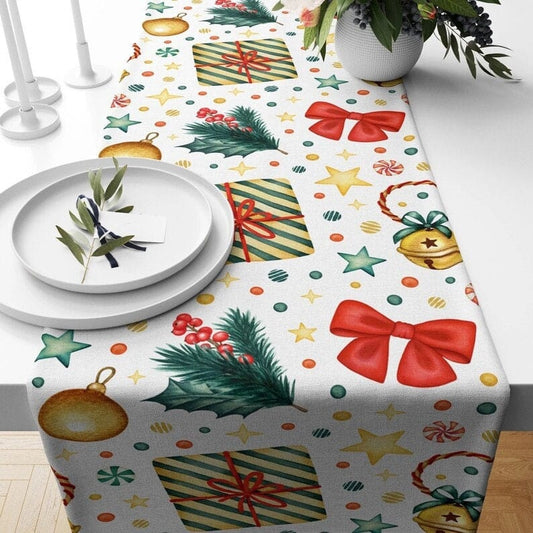
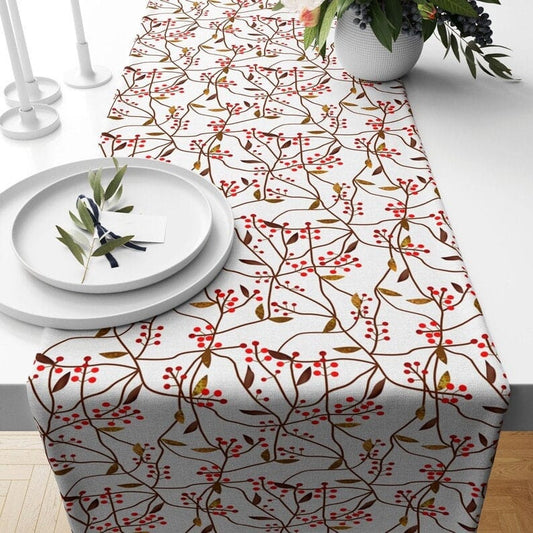
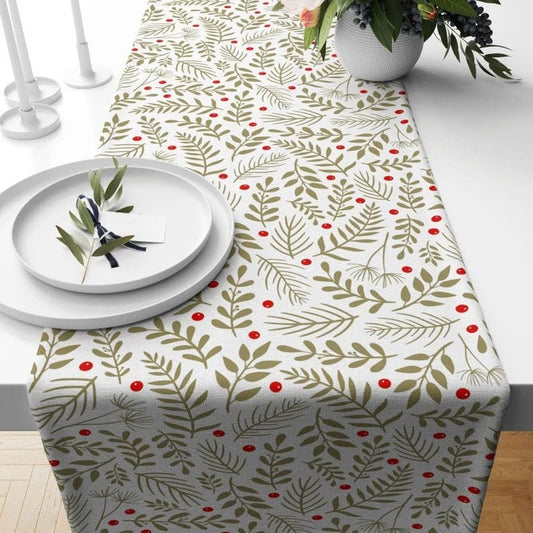
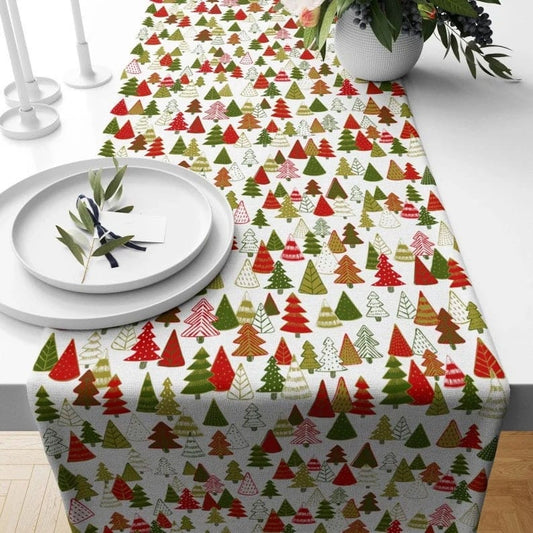
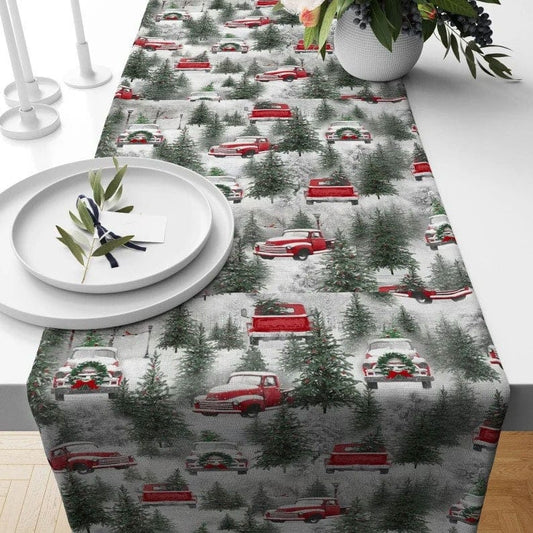
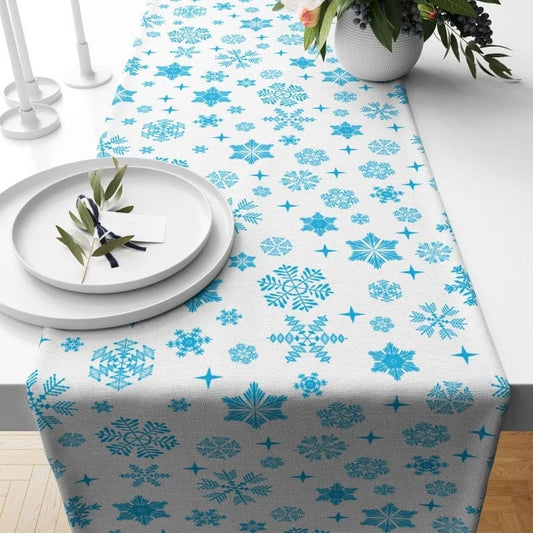
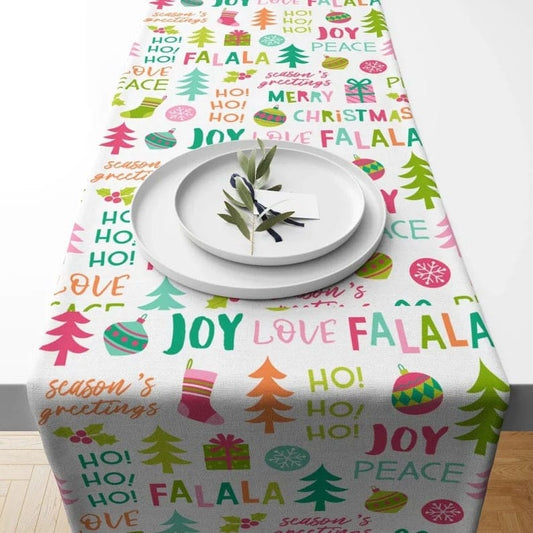
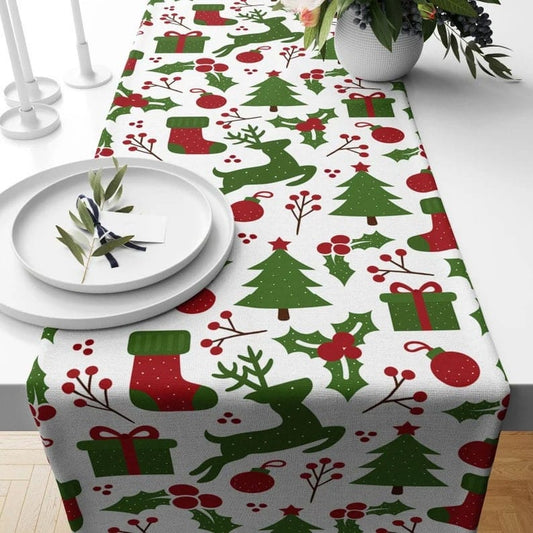
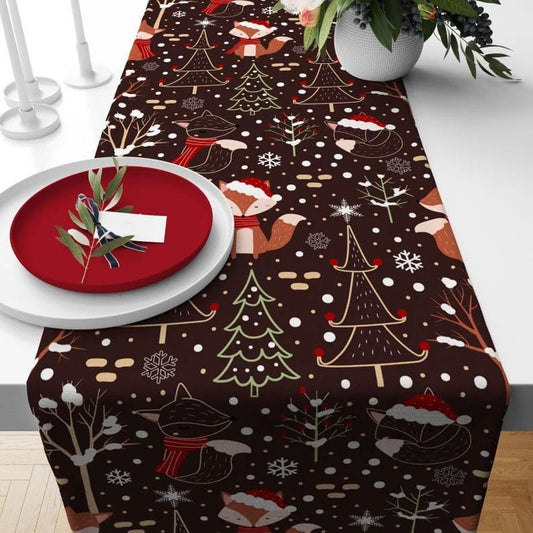
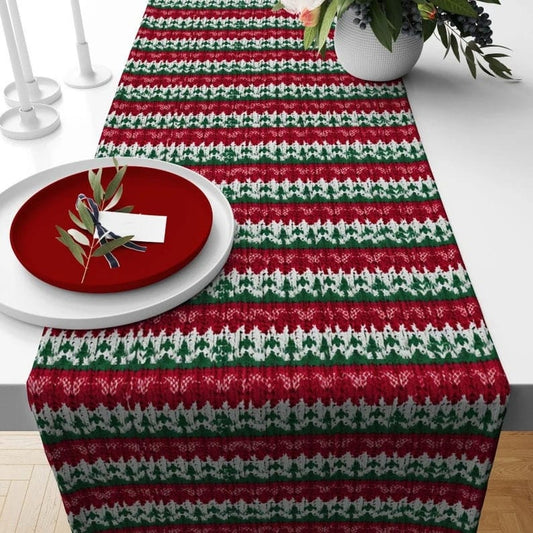
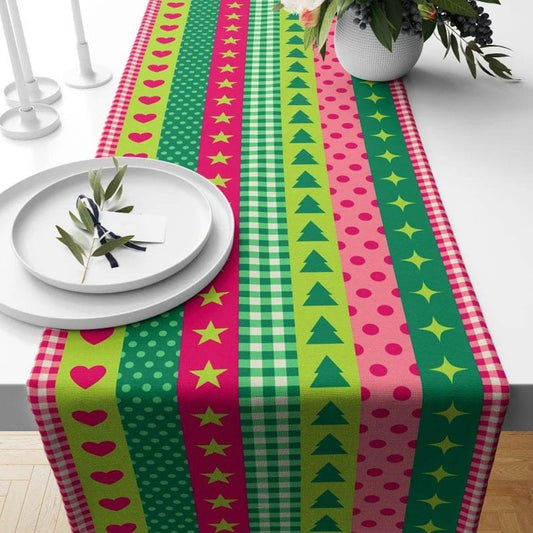
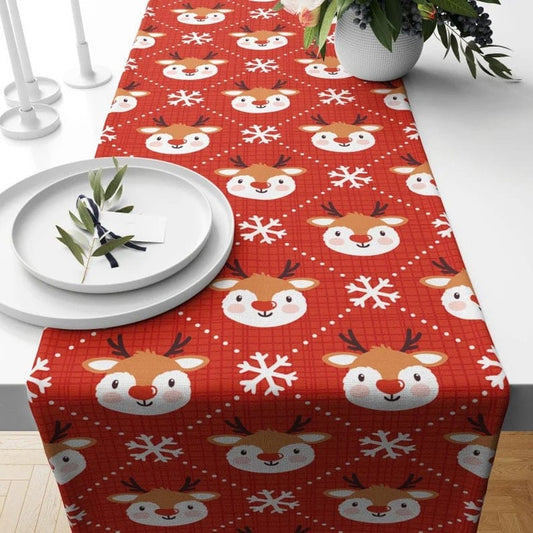
A table runner is the quickest way to change how a table looks. It costs a fraction of new tableware, takes a second to lay, and turns a bare surface into something considered. Our runners are printed in four patterns and twenty five size combinations, in two widths, 30cm and 45cm, and lengths from 120cm to 200cm, so you can dress a small kitchen table or a long dining table from the same design. Every runner is printed to order, and UK delivery is free.
Choosing the Right Length and Width
Getting the size right matters more than the pattern. The convention is that a runner should overhang each end of the table by roughly 15cm to 30cm, or finish flush with the table edge if you prefer a cleaner line. Anything that hangs much further starts to catch on chairs and laps. For width, 30cm suits narrow tables and console tables, while 45cm suits standard dining tables and gives more presence under a centrepiece.
-
Measure the table, not the room. Take the full length of the tabletop, then add 30cm to 60cm in total if you want an overhang at both ends.
-
30cm width. Best for console tables, narrow kitchen tables, sideboards and any surface where you want the wood to remain the main event.
-
45cm width. Best for six and eight seat dining tables, and for anywhere the runner needs to hold its own against place settings and glassware.
-
Round tables. A runner still works, laid across the centre. Choose a length close to the diameter so it does not hang awkwardly at the curve.
Styling a Runner Through the Year
A runner is the cheapest seasonal change in the house. Because it is a single piece of fabric rather than a full set of linens, swapping it in October and again in December costs very little and changes the whole table. It also protects the surface underneath from heat marks and scratches, which matters on a timber table.
-
Everyday use. A patterned runner hides crumbs and marks far better than a plain tablecloth, which makes it practical for a table used three times a day.
-
Dinner parties. Layer plain placemats over a patterned runner. The runner supplies the colour, the mats keep each setting legible.
-
Seasonal changes. Autumn, Christmas, Easter and summer designs let the same table read differently four times a year without buying anything else.
-
Console and sideboard. A 30cm runner under a lamp, a bowl and a stack of books turns a functional surface into a composed one.
Made to Order and Cared For Properly
Every runner is printed after you order rather than pulled from stock, which is why the size you choose is made exactly as specified. Delivery within the UK is free, and international shipping is available. As with all our printed textiles, we recommend professional dry cleaning to keep the print sharp and the colours true.
Frequently Asked Questions About Table Runners
1. What size table runner do I need?
Measure the length of your tabletop first. If you want the traditional overhang, add 15cm to 30cm at each end, so a 150cm table takes a runner of roughly 180cm to 210cm. If you prefer the runner to finish flush with the table edge, simply match the table length. For width, choose 30cm for narrow or console tables and 45cm for standard dining tables.
2. Can I use a table runner without a tablecloth?
Yes, and it is now the more common way to use one. A runner laid directly on a bare table lets the timber or stone show at the edges, which most people prefer to covering the surface entirely. It also means far less laundry. The tablecloth and runner combination still suits formal settings and older tables you want to protect completely.
3. Which way should a runner be laid on the table?
Lengthways down the centre is standard, running parallel with the long edge of the table. The alternative is to lay several shorter runners crossways, one in front of each pair of place settings, which works well on a wide table and gives each guest their own defined area. Both are correct, and the crossways version is the more practical choice for a very wide table.
4. How do I stop the runner sliding around?
On a polished or glass table, a runner will move. Two things fix it: a thin non slip mat cut slightly smaller than the runner and laid underneath, or simply weighting each end with something you were putting on the table anyway, such as a candle holder, a plant or a serving board. Ironing out the fold creases before laying it also helps considerably.
5. How should I clean a printed table runner?
Professional dry cleaning keeps the print sharpest and the colours truest, and it is what we recommend. For everyday spills, blot immediately with a clean cloth and cool water rather than rubbing, since rubbing pushes the stain into the weave. Deal with anything oily quickly, as oil is the hardest mark to remove once it has set into a printed fabric.
6. Can I order a runner in a custom length?
The collection covers twenty five standard size combinations, from 30cm by 120cm up to 45cm by 200cm, which fits the great majority of tables. If your table falls between two sizes, choose the shorter option and lay it flush rather than the longer one, since an overhang that is too generous catches on chairs and gets pulled off the table.
Explore more: Abstract Table Runners, Autumn Table Runner, Christmas Table Runners and Easter Table Runners. Pair them with Cushion Covers.